The Fighting Temeraire: Unraveling the Misconceptions Behind JMW Turner's Masterpiece
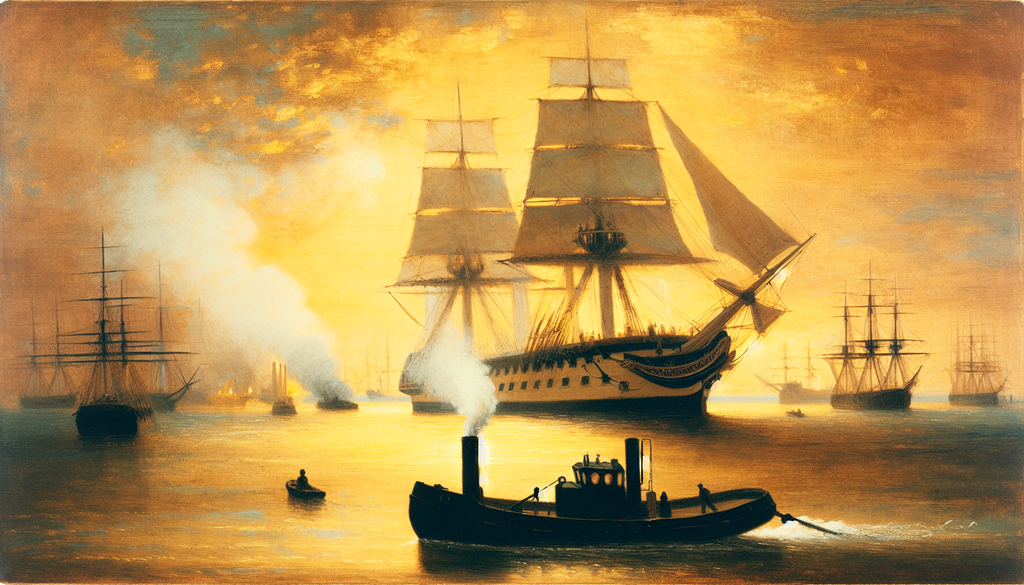
With the world of museums marking 250 years since the birth of JMW Turner, it's the perfect moment to reconsider one of his most treasured masterpieces: The Fighting Temeraire.
Unveiled in 1839, The Fighting Temeraire quickly captured the British public's imagination and remains an iconic piece even today. It was once crowned the nation's favourite painting and is currently featured on the £20 note. Yet, the commonly held reading of the artwork’s symbolism may diverge significantly from Turner’s real vision.
The painting's title, "Temeraire," refers to a formidable British naval ship boasting 98 guns. This warship rose to fame during the Napoleonic Wars, playing a central part in the nation's defense. Its final chapter came in 1838, when it was dismantled and sold for parts. Turner immortalized this moment by painting the once-proud vessel being towed down a golden-hued Thames by a new steam-powered tug.
A brief yet meaningful moment from the 2012 James Bond film Skyfall reflects a popular perception of the painting. In the National Gallery, Bond (Daniel Craig) chats with Q (Ben Whishaw) in front of Turner’s work. “There's something rather melancholic about it,” Q remarks, delivering a symbolic jab at Bond’s traditionalism. “A proud old warship dragged off to die.”
This sentiment reflects the widely accepted interpretation—that the painting is a mournful tribute to lost glory. In this version, the dignified Temeraire is the tragic hero, while the steam tug becomes the antagonist. Influential figures in the 19th century like writer William Makepeace Thackeray described the tugboat with scorn, and American author Herman Melville belittled it compared to the formidable Temeraire.
Given the reputation of HMS Temeraire, it’s understandable that Turner's contemporaries may have viewed her dismantling with sadness. In 1804, she was vital in naval blockades, and her greatest glory came during the Battle of Trafalgar on October 21, 1805, when she stormed into combat to aid Admiral Nelson’s HMS Victory against the French ship Redoubtable.
Against clouds of smoke and volleys of cannon fire, the Temeraire broke through, guns blazing. She endured brutal exchanges that shattered her decks, yet she stood firm, becoming a pivotal player in securing British dominance in the sea battle that defined an era.
Turner painted The Fighting Temeraire at age 64. Born in 1775 in a working-class part of London, he entered the Royal Academy at 14 and became a full member by 24. He soon held the role of Professor of Perspective, yet never lost his Cockney roots or streetwise grit. He was also a shrewd businessman—running his own gallery, courting patrons, and eagerly chasing projects with wide appeal. One such aim in The Fighting Temeraire was to tap into the public's deep sense of national pride.
But the real insight behind the painting goes beyond patriotism. The overlooked star of the composition isn’t the fading warship—but the gritty steam-powered tugboat leading it away.
Steam technology was the latest marvel of Turner’s time, and his view of it was neither simplistic nor negative. In other works—like Snow Storm – Steam-Boat (1842) and Rain, Steam and Speed (1844)—Turner enthusiastically explored industrialization’s effect on people, landscapes, and the societal psyche. This progressive fascination marked a significant departure from fellow artist John Constable, whose idyllic scenes ignored such sweeping changes altogether.
Constable’s pastoral masterpiece The Hay Wain (1821) glides gently into rural bliss. In contrast, Turner's The Fighting Temeraire charges head-on into the relentless machinery of progress.
This was no artistic exaggeration. At the time of the painting, the Royal Navy had already begun replacing sails with steam. But the tugging away of the Temeraire didn’t merely signify a technological update—it marked the end of a centuries-old maritime tradition. Sail, an ancient symbol of adventure and destiny stretching back to Homer’s epic voyages, was being overtaken by the brute certainty of engines. In his art, Turner grasped this epochal shift, illustrating a symbolic pivot into the industrial age.
Turner recognized that artists could not remain passive during such irreversible change. Representing ornate ships and billowing sails was no longer enough. He believed it was the artist’s duty to seek beauty in the newly emerging world—in steam power, iron machines, and modern engineering. In The Fighting Temeraire, this idea crystalizes in a single elegant and powerful image.
Related reading:
• The rediscovered Monet now gaining the spotlight
• America's divisive embrace of sentimental art
• The unexpected tale of Van Gogh's unsung supporter
Turner also innovated through materials and technique. He incorporated recently developed pigments like Lemon Yellow and Scarlet Lake. Scientific studies have even discovered unconventional ingredients in the artwork—possibly household items like cooking fat or salad oil used to alter texture or finish, showing his experimental spirit.
His fascination with modernity and his relentless invention left an enduring impact. Impressionist masters Claude Monet and Camille Pissarro were deeply influenced by Turner’s work. In fact, a print of Rain, Steam and Speed was proudly exhibited at the seminal 1874 Impressionist Exhibition in Paris—a turning point in the evolution of modern visual art.
In 2025, exhibitions across the UK and the US will honor Turner’s 250th birthday—from the Walker Art Gallery in Liverpool (Turner: Always Contemporary) to his former home in Twickenham and at the Yale Center for British Art in Connecticut. London’s Tate Britain will juxtapose Turner and Constable in a landmark show. Yet truly understanding Turner requires exploring the profound vision behind The Fighting Temeraire.
Although long seen as a sentimental farewell to a bygone era, the painting carries a deeper message. Far from being just a relic of nostalgia, it symbolizes transformation, adaptation, and the unstoppable momentum of innovation. The boldness Turner shows in embracing the future—through subject and technique—is his truest gift to modern art.
Mark your calendar: JMW Turner’s 250th birthday falls on April 23, 2025.
--
Enjoyed this piece? Subscribe to The Essential List newsletter for top stories, features, and videos delivered straight to your inbox twice a week.
Follow more Culture content on Facebook, X (formerly Twitter), and Instagram.