‘Ethically uneasy’: exploring the grand Lars von Trier showcase in Copenhagen
Even before I step inside, an unsettling feeling creeps over me. Searching for the entrance to Nikolaj Kunsthal—a gothic former church in Copenhagen—I’m struck by the dramatic strains of Wagner’s Tristan und Isolde. The music, famously used in Lars von Trier’s apocalyptic 2011 film Melancholia, sets a haunting scene. Inside, I sit within a draped structure reminiscent of the film’s tent, watching a planet barrel toward Earth to the sound of Wagner’s crescendo. Nearby, a long banquet table lies deserted—its once-celebratory setting now littered with decaying flowers and wax-dripping candelabras.
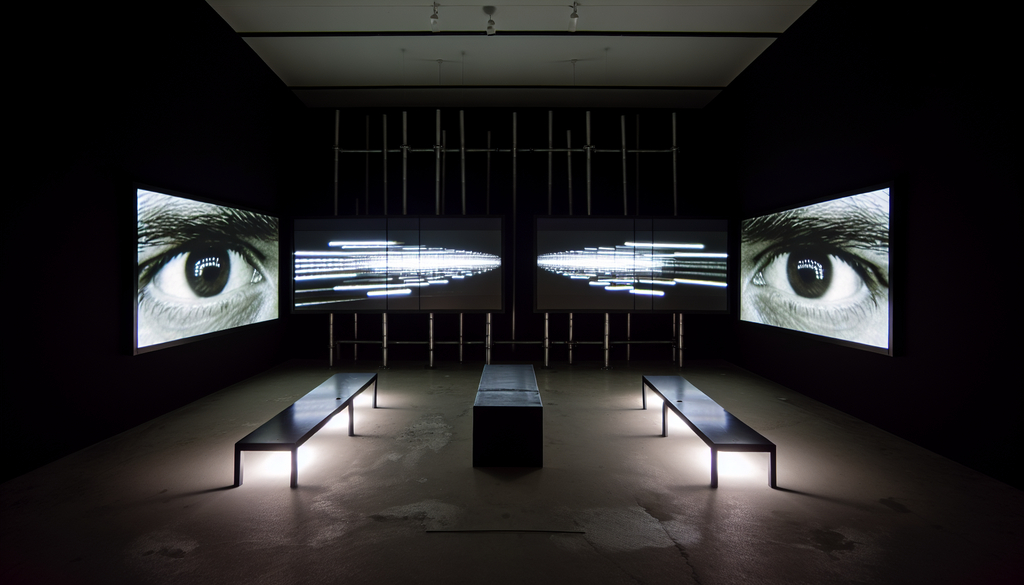
Upstairs, black-and-white projections flicker across the walls. A ticking clock, old German trains rolling through post-war landscapes, and tangled bodies submerged in water play on loop. The deep, disembodied narration from Von Trier’s 1991 film Europa counts down ominously. “With every breath, you dive deeper,” the voice says. “At the count of ten, you will find yourself in Europa.”
As the world grapples with Trump’s return, ongoing wars in Europe, the looming dominance of AI, and the intensifying climate crisis, this immersive dive into Von Trier’s cinematic universe feels uncannily timely. Intended as a journey through the distinctive visual lexicon of Denmark’s provocative auteur, the exhibition resonates far beyond nostalgia.
“It feels like a shift in consciousness,” says Helene Nyborg Bay, the artistic head of Nikolaj Kunsthal and curator of the Breaking Darkness exhibition dedicated to Von Trier. “After the second world war, we had this idealistic belief in the United Nations and global unity. Now, troubling new ideologies are emerging—and Von Trier taps into these undercurrents.”
Yet in many respects, Lars von Trier feels out of step with 2025. His films have long drawn criticism for their portrayal of women, and his career has been riddled with controversy. In 2011, promoting Melancholia at Cannes, he dismayed international audiences by calling himself a Nazi and expressing sympathy for Hitler—a comment that led to his expulsion. He later apologized, denying any racist or antisemitic beliefs. More damagingly, during the rise of #MeToo, Björk accused him of sexual harassment while filming Dancer in the Dark, an allegation he has denied.
Still, the exhibition's debut drew extraordinary crowds—2,000 visitors in just three hours, many of them young. Why such strong interest? “He has the vision and aesthetic depth of a true visual artist,” says Bay. Controversy aside, she maintains that Von Trier’s themes—grief, love, morality, faith, and the nature of choice—continue to touch audiences. “We live in a different era,” she reflects. “But perhaps he was always ahead of his.”
As a longtime admirer of Von Trier’s work, Bay admits she never found his depiction of women offensive herself, although she acknowledges that younger women may see it differently. “It’s a subject worth discussing,” she says. “It’s important to open those conversations.”
The exhibition blends cinematic excerpts with art installations and design, many of which play off the architecture of the former church. It delves into five of Von Trier’s most talked-about films, spanning 1991 to 2011: Melancholia, Europa, Dancer in the Dark, Breaking the Waves, and Dogville. Scattered throughout are a few iconic props—Nicole Kidman’s fur coat from Dogville and Kirsten Dunst's ethereal wedding dress from Melancholia, which appears to grow into the structure itself like living roots. Yet this is no memorabilia showcase; it’s about atmosphere and emotion.
The experience even ascends the bell tower, where guests can follow a chalk-like white line—reminiscent of Dogville’s minimalist stage design—up a narrow staircase to the peak of the church. Vivaldi’s music floats through the air, but without moving images or emotional heft, this portion feels less immersive than, say, the Melancholia scene, which remains the exhibition's emotional centerpiece. However, the contrast offers balance against the other sensory-rich segments.
Bay enlisted young creatives to reimagine Von Trier’s cinematic universe in a way that appeals even to those unfamiliar with his films—especially the generations who may have distanced themselves from him. Her vision was sparked by a Von Trier photo exhibition at the Perrotin gallery in Paris. She is particularly curious to see how under-30s react: “It’s more about capturing a mood or emotional undercurrent—about tapping into life’s complexities in subtle ways.”
Although Von Trier, now living in a care facility with Parkinson’s, did not contribute directly, he gave the show his blessing. He even made a virtual appearance during the opening, joining via FaceTime with assistance from his former spouse. Bay noticed a group of Zentropa producers—Von Trier’s long-time collaborators—sitting quietly under the (fictional) descending planet during the launch.
Uncommonly, the exhibition includes an embedded critique, penned by satirical graphic novelist and feminist Sofie Riise Nors. In a comic-style narrative piece, she appears as a fictional radio host conducting an on-air conversation about Von Trier, confronting his glorified depictions of violence against women and his problematic muse-artist relationships. She revisits controversial moments like Björk’s accusations and questions whether his female characters are truly empowering or simply reflections of his personal fantasies.
“His women seem more like projections of his own desires than representations of female experience,” says Nors’ alter ego. She identifies Melancholia’s poignant final scene—in which Dunst and Gainsbourg face planetary annihilation—as another example of Von Trier “aesthetically fetishizing women’s suffering.” She also references Selma’s execution in Dancer in the Dark, Kidman’s chaining in Dogville, and Gainsbourg’s self-mutilation in Antichrist.
Might this dual format—both adoration and critique—offer a blueprint for how we engage with problematic artists whose work still resonates? Bay believes that, for all their differences, both Von Trier and Nors reflect deeply. “That’s the foundation for dialogue,” she says. “It’s a space for critical thinking.”
But Nors is skeptical. “The fact that we’re still holding exhibitions that ultimately celebrate Lars von Trier shows he was never really canceled—at least not here in Denmark,” she remarks. While she understands his cultural significance, she believes more critical voices should have been included. “An artist can be brilliant,” she concludes, “and still be deeply problematic.”
Breaking Darkness is on display at Nikolaj Kunsthal in Copenhagen until July 27.