Disputed will that ignited Shakespeare family feud discovered
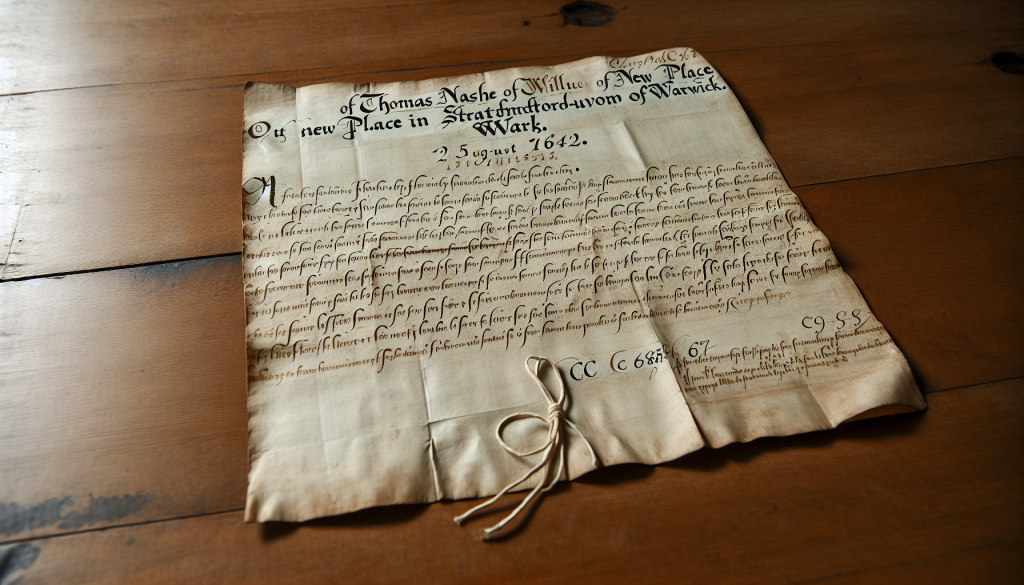
A will from the 17th century, which led to a dispute within William Shakespeare’s family over his grand residence in Stratford-upon-Avon, has come to light.
The document was written by Thomas Nash on August 25, 1642, and was uncovered by Dr. Dan Gosling, a historian at The National Archives. He discovered it while examining unlisted boxes filled with various property records.
According to Dr. Gosling, the document had likely remained unseen for more than 150 years after it was stored away in the late 1800s.
He noted that the contents of the will suggested the administration of Shakespeare’s own will had its complications.
Thomas Nash, also spelled Nashe, was married to Elizabeth Hall, Shakespeare’s granddaughter. They lived in New Place, then considered the family home and one of the largest houses in the town.
In his will, Nash left the property to his cousin Edward, even though he had no legal authority to do so.
Shakespeare had already bequeathed the estate to his eldest daughter, Susanna, who was residing there with her daughter Elizabeth and Nash.
When Nash passed away in 1647, Susanna and Elizabeth obtained legal confirmation that they retained ownership of Shakespeare’s estate.
In 1648, Edward Nash took legal action against Elizabeth, insisting she carry out the wishes stated in her late husband's will.
The dispute was brought before the Court of Chancery, where Elizabeth argued that her husband lacked the legal rights to give away the property. She referred to Shakespeare's original bequest to her mother, Susanna.
According to Dr. Gosling, Elizabeth – later known as Lady Barnard – likely resolved the matter privately and remained living at New Place until her death in 1670.
"I was thrilled to discover how it connected with the court case, the Shakespeare family, and the final direct descendants of the Bard," Dr. Gosling said.