‘Muslim children are truly underrepresented’: the animated film where medieval mathematics inspires curious young minds
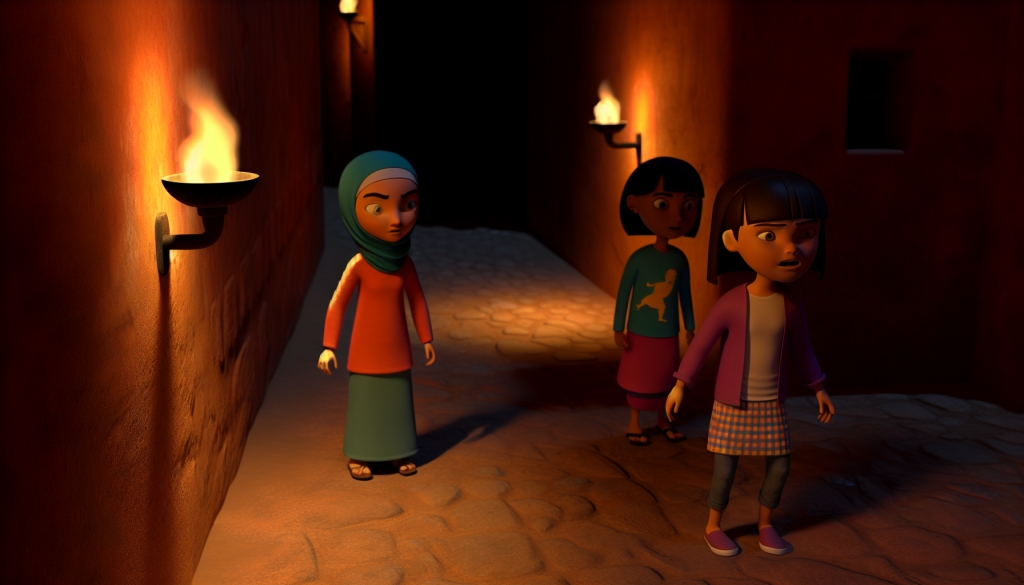
“Some people claimed it wasn’t real – that it was just a myth.” That is how Flordeliza Dayrit describes the Silk Road, the vast network of trade routes that once linked Asia, Africa, and Europe. It is also the historical backdrop for Time Hoppers: The Silk Road, the animated feature she created alongside her husband, Michael Milo.
Speaking from their home in Edmonton, Canada, the pair recount how a simple fascination with history gradually evolved into a much larger creative undertaking. Now released in UK cinemas, Time Hoppers transforms that curiosity into a lively family adventure. The film follows four young heroes who journey back in time to the medieval Islamic world, encountering scientists and thinkers whose ideas continue to influence daily life today.
“It’s a time-travel action story for children and families,” Milo explains. “At its heart, it becomes a thrilling chase.”
The young characters – Abdullah, Aysha, Khalid, and Layla – accidentally activate a time machine in a laboratory and soon discover they are being hunted by a renegade alchemist determined to harness its power. As they move across regions and centuries, the children must recover the device while safeguarding key historical figures from disruption.
“Our goal is to make learning about that period exciting and accessible,” Milo says. “The people they meet are groundbreaking scholars and innovators.”
Among those featured are Al-Khwarizmi, often called the father of algebra; Ibn al-Haytham, whose experiments with light led to the development of the camera obscura; and Mansa Musa, the ruler of the Malian empire, widely regarded as one of the wealthiest individuals in history. The story also introduces Maryam al-Astrulabi, a 10th-century Syrian scholar known for refining the astrolabe, an important astronomical instrument.
“We wanted to highlight that scholarship wasn’t limited to men,” Dayrit says. “Women were also leading contributors in science and discovery.”
From the beginning, Dayrit emphasizes, the film was never intended solely for Muslim audiences. “We wanted viewers everywhere to connect with it,” she explains.
When children have watched the film, she notes, their reactions have been enthusiastic and open. “They’re genuinely excited to learn about different cultures and histories.”
The origins of the project lie in education rather than cinema. Before becoming a feature-length film, Time Hoppers began as an ebook, later expanding into a game and even an unreleased television concept. It forms part of a larger creative universe developed through Muslim Kids TV, the platform the couple launched nearly 20 years ago.
“We’ve been producing children’s content for almost two decades,” Milo says. “And we recognized early on that Muslim children were rarely represented on screen.”
Both Milo and Dayrit embraced Islam independently in 1995 and married the following year. Their personal journeys shaped their creative direction. What started as educational material for their own children gradually became a broader mission: to tell stories where Muslim children could see themselves as central characters.
“It mattered to us that the kids were the heroes,” Dayrit says. That commitment goes beyond simple visibility. “Representation isn’t only about being seen; it’s about believing in what’s possible.”
They point to the reality faced by many Muslim children in Europe and North America, where rising Islamophobia and negative stereotypes often shape public narratives. “When you repeatedly hear harmful messages in the media or daily life, you can begin to feel like you don’t belong,” Dayrit explains. “We want children to know they absolutely do.”
Time Hoppers seeks to challenge those narratives by presenting a broader historical perspective. The production team collaborated with researchers to recreate each era with care, from architecture to clothing, ensuring authenticity while expanding the range of historical figures typically highlighted in school lessons. “Students often learn about Aristotle or Plato,” Milo says. “But it’s just as important to recognize the many other thinkers who have shaped our world.”
The film’s release strategy has also influenced its success. What began as a limited theatrical run quickly expanded due to strong audience demand. In the United States, the film screened in 660 cinemas and sold more than 35,000 tickets. In the UK, it grew from 200 locations to 299. Work on a sequel is already underway.
“We hope this shows the film industry that Muslim-centered stories aren’t niche,” Dayrit says. “They can resonate globally and succeed commercially.”
Much of the film’s growth has been driven by grassroots support. “Community advocates have been instrumental in spreading the word and building excitement,” Milo notes.
“We’ve always dreamed of becoming the Disney of the Muslim world,” Dayrit says. For now, however, their priority remains the young viewers. “We want children to feel proud of who they are and confident that they can create positive change.”
As Dayrit often tells children, summing up the film’s message: “Hands are meant for helping, words should be kind, and ideas should be brave.”
Time Hoppers is currently in cinemas.