Why Germany is Sometimes Called Germania, but Holland Isn’t the Netherlands: The Origins of Country Names
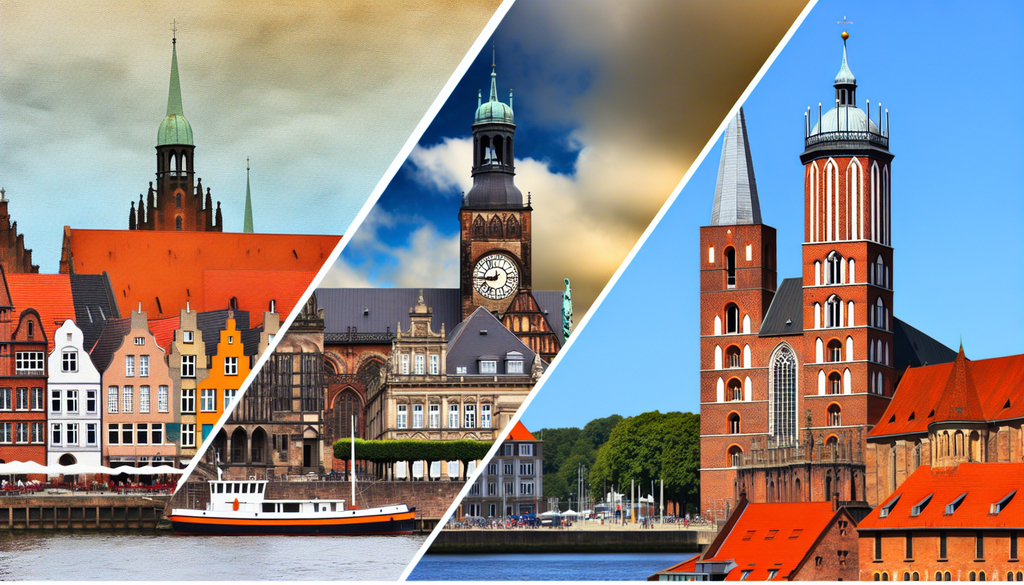
The full-scale war in Ukraine led many citizens to explore the world beyond their country's borders, learning more about foreign nations and cultures. Since February 24, 2022, a portion of Ukrainians have had to leave their homes and journey to unfamiliar places — sometimes to lands they had only heard of in name. Let’s delve into the origins of some country names across Europe and the world.
How Countries Got Their Names – Fascinating Theories
Let’s start with a disclaimer: in many cases, it’s difficult to trace reliable historical sources that explain exactly how a country's name came to be. That’s largely because numerous nations were established so long ago that any original records, if they existed, have long since disappeared. What we do have are hypotheses — some quite compelling.
Germany
The name for this country varies dramatically in different languages. In Ukrainian, it is "Німеччина," derived from the Slavic word “німець.” Historically, this term was used to refer to foreigners — particularly Europeans who didn't speak a Slavic language. Literally, “німець” means “mute,” implying someone unintelligible to Slavic ears.
In both Russian and English, the country is known as “Germany,” a name that has roots in the Latin “Germania.” The Latin parts “ger” (spear) and “man” (man) combine to describe "spear-wielders" or “armed men,” making Germany “the land of spear people.”
Interestingly, the French call Germany "Allemagne" — a derivation from the Latin for “land of all people,” aligning closely with the German term “Deutschland.”
So, if you've ever wondered why a Germany exists but its language is called “German,” it's because only Slavic languages and cultures use the term derived from “mute” to describe Germans.
Holland
If you’ve ever pondered how country names originate, you’ve likely noticed that geography often plays a role. Take the Netherlands, for example — a country largely situated below sea level.
Germanic tribes once accurately described this land as “hoi (hal)” meaning "low," and “land,” thus forming the word "Holland" — the “low land.”
Now, why does the same country go by both Holland and the Netherlands? The answer is simple: the Netherlands is the official name of the country, while Holland refers to a specific region within it — the area that houses its capital, Amsterdam.
Britain, Great Britain, and England
To clarify the distinction between Britain and England — and where “Great Britain” fits in — we need a quick history lesson. “Britain” came first, deriving from the ancient Celtic tribe known as the “Britons,” who lived on the islands from the 8th century BCE to the 5th century CE. Later, Germanic tribes called the “Angles” arrived, giving rise to the name “England.”
Today, three main terms are used:
• Britain – the historical name
• Great Britain – refers to the island consisting of England, Wales, and Scotland
• England – one of the regions within Great Britain
Moreover, the nation’s official, full name is “The United Kingdom of Great Britain and Northern Ireland.” This includes four regions: England, Wales, Scotland, and Northern Ireland.
Vatican
The name of this tiny, independent state likely comes from the hill it sits on. In the Roman Empire, it was called “Mons Vaticanus” — “the hill of prophecy,” where seers gathered to interpret visions, known as "vaticinations." Another story suggests it was named after a nearby town called “Vaticum,” now long gone.
Spain
Rome played a key role in naming various regions, including Spain. One of the theories is that the name originates from the Latin term “Hispania,” which Romans used to refer to the Iberian Peninsula. An alternate explanation links the name to the Phoenicians, according to which “I-spanim” meant “land of hyraxes” in their language.
Italy
One popular theory goes back to Ancient Rome, where a group of tribes known as the “Italics” lived. When the Romans eventually conquered them, the southern area of their territory came to be known as “Italia.”
Another possibility is that “Italia” is a Latin word derived from one of the Oscan languages, and in Greek it meant “the land of calves.” Cattle, especially bulls, symbolized freedom for many Italic tribes.
A third interpretation links the name to the ancient Greek word “Aιθαλία” or “Aitalia,” which has a root associated with fire. It’s believed this may have been inspired by the island’s volcanic activity.
You might also find these stories interesting:
• These European countries make it easiest for Ukrainians to get citizenship
• World’s top scenic destinations you should visit first
• Top 10 most expensive cities to live in — and how they compare with Kyiv