Trending Videos Spark Widespread Cleanup of Caves Near China’s Iconic ‘Avatar’ Peaks
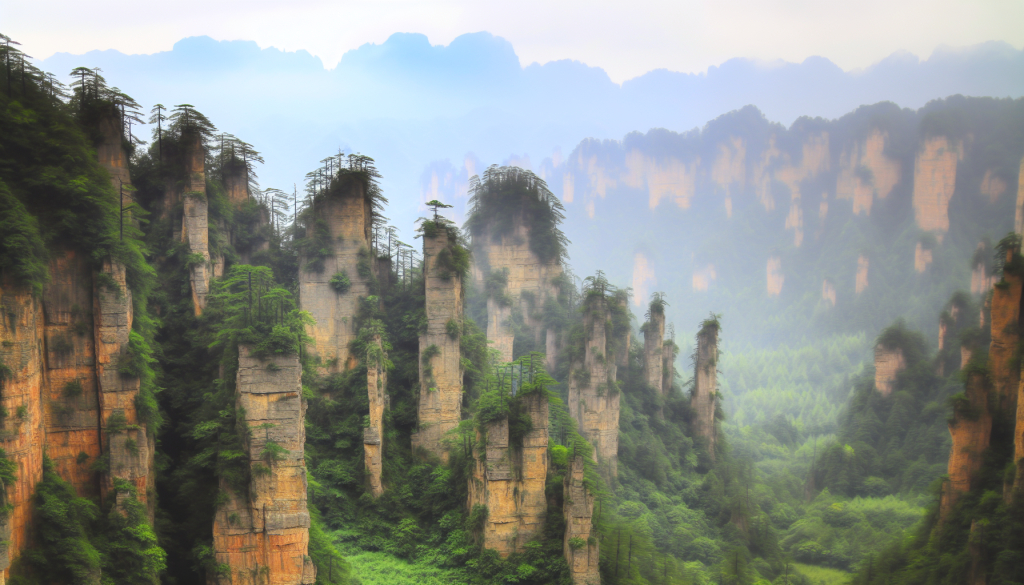
May and early June are often ideal months for exploring Zhangjiajie Forest Park, located in southwest China's Hunan province, before the sweltering summer weather sets in.
This breathtaking park is known for its towering quartz-sandstone columns, which are believed to have inspired the incredible floating landscapes in the 2009 film “Avatar.”
However, while throngs of tourists continue to pour in this year, a major cleanup effort is taking place just a few dozen miles away. Workers are removing hefty loads of garbage from ancient caves — refuse believed to have been discarded more than ten years ago.
This longstanding ecological issue, found in Cili county under the jurisdiction of Zhangjiajie, came to public awareness in March when cave explorers shared video footage of the extensive garbage buildup on the social media platform Douyin.
The videos rapidly gained attention in May, sparking public concern and prompting action from media outlets and local authorities.
The karst caves in and around Zhangjiajie are renowned natural formations, created over millions of years by water erosion. These caverns often feature both visible and hidden waterways and striking rock formations.
One prominent video shared by a spelunker going by “Xiaofugege” revealed plastic bottles, metal cans, and even containers labeled as chemical waste scattered throughout the cave systems.
In a particularly distressing video posted on May 29, he described the trash layered “seven or eight floors high.”
Another clip showed solid waste spread so thickly across the ground that the person filming claimed they could walk over it.
Caves Contaminated With Garbage and Animal Waste
China’s President Xi Jinping has often emphasized the importance of environmental stewardship across the country.
Authorities reported on June 9 that 51 tons of debris had already been extracted from two of the most affected cave systems.
Much of the refuse consisted of everyday waste, left behind between 2010 and 2015 after the local government prohibited open-air burning of trash but failed to provide alternative disposal methods.
During those years, garbage dumping into caves became commonplace and, in some areas, was even coordinated. Local accounts indicate that trash collection trucks often transported garbage directly to the karst formations for disposal.
One resident, according to reports, said his father would dispose of waste in a nearby cave simply for the ease of access, just 200 meters from their home.
“You can find single-use items, torn clothing, plastic wrappers… any kind of waste you can imagine,” one site safety officer shared with CCTV during the cleanup process.
Authorities also noted the presence of animal waste as a major concern.
In a video recorded in April, filmed deep inside a karst cave, animal excrement was seen leaking through the cave ceiling, staining the once-white stalactites and gathering into sludgy pools.
Cili county has a significant pork industry, reportedly raising around 700,000 pigs each year. After the leaked footage surfaced, local officials began probing a dozen pig farms suspected of illegally dumping waste.
Online reactions from Chinese users were harsh and emotional.
“What happens next? Will it take hundreds or even thousands of years for the environment to recover?” asked one user on Weibo.
“Those responsible should face real accountability,” added another commenter.
Authorities involved in inspections noted that of the 206 karst caves surveyed, about two-thirds showed signs of contamination. Cleanup efforts were temporarily stopped from June 9 to June 12 due to dangerous air quality detected inside the caves.
Experts warn that the impact may already be irreversible.
“If pollutants seep into the underground aquifers of the karst landscape, they can quickly spread and compromise downstream water sources, affecting water quality and aquatic ecosystems,” said Shuai Huan, deputy head of a local geological research center, speaking to CCTV.
This isn't an isolated case. In 2023, authorities in Bijie city, Guizhou province, confirmed that more than ten local caves had been tainted by similar pollutants, from household garbage to livestock runoff.
Protected UNESCO Site Remains a Tourist Favorite
While cleanup crews work to clear the pollution in Cili, visitors continue to flock to the nearby Zhangjiajie Forest Park. From May 31 to June 2 alone, the park drew nearly 400,000 people—up about 10% compared to last year, according to official figures.
This park lies within the expansive Wulingyuan Scenic Area, which spans over 100 square miles and holds designation as a UNESCO World Heritage Site.
In 2010, the local government renamed one of the region’s iconic columns “Avatar Hallelujah Mountain,” crediting its resemblance to the majestic alien landscapes from the blockbuster film.
At the renaming event, one park representative declared, “Zhangjiajie isn’t just part of China—it belongs to the world.”
The park features multiple major attractions, including the well-known Bailong Elevator, which rises 1,070 feet along a cliff face.
This structure, built in 2002, is believed to be the world’s tallest outdoor lift. It comprises three twin-deck elevators that can each carry up to 46 passengers to the top in under two minutes.
Other notable sights include the Zhangjiajie Grand Canyon Glass Bridge, one of the highest pedestrian bridges in the world, which also offers daring visitors the chance to try bungee jumping from stunning heights.
One of the most recent additions is the “Sky Ladder,” or Tianti—a 551-foot-long walkway suspended between two sheer cliffs, hanging at around 5,000 feet above sea level.