U.S. citizens among international travelers marooned on remote Yemeni island
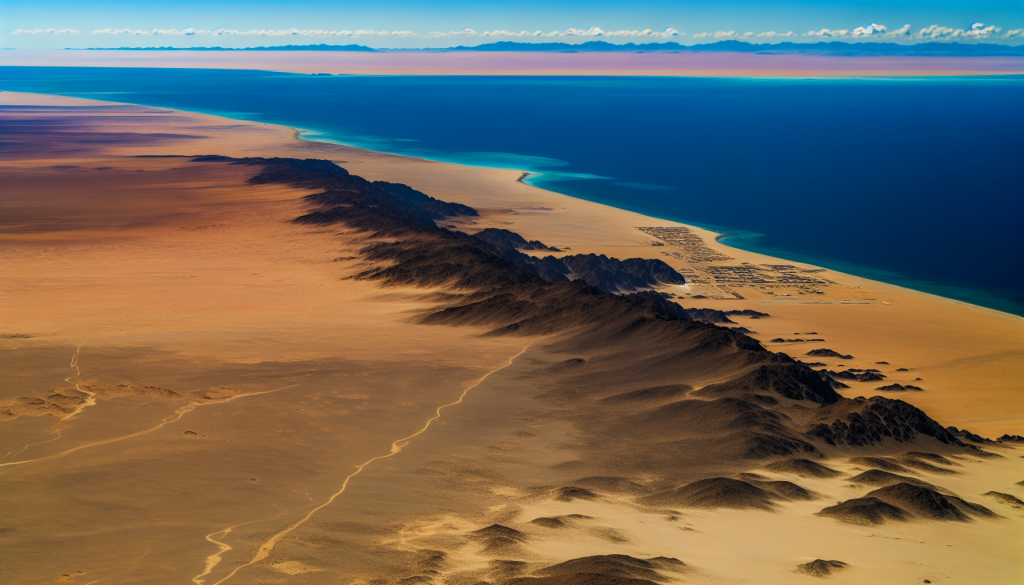
Dozens of international travelers seeking adventure on a distant Indian Ocean island have found themselves unable to leave due to mounting conflict in Yemen disrupting transportation routes.
Tourists from Europe and the United States told CNN that potentially “hundreds” of people are currently stuck on the island of Socotra, which lies at the crossroads of the Gulf of Aden, the Arabian Sea, and the Guardafui Channel. Authorities recently declared a state of emergency, resulting in the closure of all transport hubs.
While the exact number of stranded visitors is unconfirmed, reports suggest at least several dozen travelers are affected by the situation.
Socotra is renowned for its extraordinary natural environment and is listed as a UNESCO World Heritage Site. It has become a sought-after destination for adventure tourism, particularly for expatriates traveling from the nearby United Arab Emirates. The island features dramatic coastal cliffs, untouched beaches, and distinctive plant species like the rare dragon’s blood tree.
These ancient dragon’s blood trees are found nowhere else on the planet, and their continued existence is increasingly at risk.
Thanks to its remote location, Socotra had been largely unaffected by Yemen’s ongoing civil war. However, recent regional escalations—highlighted by Saudi airstrikes targeting a UAE-aligned shipment—have impacted the area.
Last week, the U.S. Department of State acknowledged receiving reports of “operational disruptions” involving flight cancelations and airport closures affecting the island’s access points.
They strongly advised avoiding travel to Yemen, noting that the U.S. government is unable to offer consular support in the country, including Socotra.
'There are so many here'
An American traveler currently on Socotra, speaking anonymously due to safety concerns, said that while the situation is calm, tourists remain unsure when they might be able to leave the island.
"There are a lot of people here," the traveler said, noting they have made contact with fellow tourists from nearby camps.
"There’s a wide mix of Western nationals stranded. It really could be hundreds," the individual added.
Rocky Road Travel, a tourism agency based in Berlin, confirmed that 14 of its clients are stuck and said it has reached out to U.S. embassies in Abu Dhabi and Riyadh, as well as European diplomatic missions, in hopes of finding a solution.
The visitors reported that embassies, while aware of the situation, have so far been unable to offer much assistance. Most nations have no diplomatic operations within Yemen itself, managing affairs from neighboring countries instead.
Gerrit van Wijngaarden, a Dutch-Polish tourist traveling with his wife, their children, and a grandchild, told CNN that their one-week visit has now extended to 11 days.
“Flights arrived for a while, but none have departed recently,” he said. “There are currently a lot of tourists on the island.”
He added that there may be as many as 100 Polish nationals stranded as well. The Polish embassy responsible for Yemen, based in Saudi Arabia, has yet to provide a public statement.
As air routes remain suspended, some travelers have been encouraged to consider commercial sea crossings to Oman, where they could then book return flights. However, van Wijngaarden said he hasn’t yet taken any steps toward arranging a sea route.
A Nation in Turmoil
Since 2020, Socotra has been under the control of Yemen’s Southern Transitional Council (STC), a separatist group backed by the UAE. Economically, the UAE continues to hold significant influence over the island, which some observers characterize as indirect control.
In recent weeks, friction has intensified after the STC seized large parts of southern Yemen in December, pushing out government troops supported by Saudi Arabia.
This conflict reached a peak when Saudi forces bombed Mukalla’s port city, alleging that UAE ships had delivered military supplies to the separatists.
Although the UAE later announced plans to withdraw its forces, tensions remain high. The STC has also declared ambitions to hold an independence referendum within two years, a move that includes Socotra in its vision of self-determination for southern Yemen.
While flight services may resume in the coming days, the timeline is still uncertain. For now, many travelers remain in limbo, awaiting news.
Although access to food and other essentials remains adequate, the uncertainty is taking a toll. “We just want to know that someone is working on a solution,” van Wijngaarden said.