Alpine spa escape: thermal springs and hiking beneath Mont Blanc
Mont Blanc is veiled by cloud, yet the Aiguille du Midi still pierces the sky above slopes glowing in copper, amber and ochre. Maple leaves burn scarlet, while rowan branches hang heavy with deep-red berries.
Our small party rattles up to Mont Lachat station, 2,115 metres above sea level, aboard the Tramway du Mont Blanc. This historic cog railway has been hauling passengers up remarkably steep ground from the French Alpine town of Saint-Gervais-les-Bains since 1909. It was originally meant to continue all the way to Mont Blanc’s 4,809-metre summit, but conflict, difficult glaciers and dwindling finances halted the grand plan. Even so, Mont Lachat offers a spectacular reward. The Bionnassay Glacier spills down one side of the mountain towards a pale green lake, where a buzzard circles overhead; in the opposite direction, the Chamonix valley lies in gentle autumn light.
Autumn is one of the Alps’ most appealing seasons, with peaceful paths, more affordable stays and fresh air that feels invigorating rather than freezing. Resorts once devoted almost entirely to skiing have gradually expanded their warm-weather appeal, promoting hikes and bike rides through meadowlands bright with flowers. Increasingly, they are also embracing the quieter months between summer and winter, responding to travellers looking for a less crowded mountain break.
The compact spa resort of Saint-Gervais-les-Bains, around 50 minutes from Geneva and tucked between the more glamorous names of Chamonix and Megève, is well suited to this shift. With a population of about 5,800, it remains lively after the ski season and summer rush have passed, largely because of its thermal springs, first recognised in the early 1800s.
A year-round cable car, Le Valléen, now connects the railway station at Le Fayet, lower on the hillside near the spa, with the centre of Saint-Gervais. Since opening in late 2024, it has made it possible to arrive by train from London via Paris and reach the resort without hiring a car. “In Megève during the shoulder season, there is nobody,” says the town’s long-serving mayor, Jean-Marc Peillex. “Here, it is different. The key is not to think only about visitors, but about the people who live here. Then visitors benefit as well.”
At 850 metres, Saint-Gervais may not have Megève’s gloss, but it has a more understated appeal: a fortified medieval house, a 17th-century church with patterned stained-glass windows, graceful belle époque architecture around the spa and a busy Thursday market. A number of very good restaurants remain open throughout the year, while our hotel, the cosy Coeur des Neiges, charges less than half its peak summer or winter prices, making it a useful base for autumn walks.
From town, we take the Mont Blanc tramway one stop to Motivon at 1,400 metres, then set off on an hour-long hike without meeting anyone else. Cowbells provide the only soundtrack. We are heading for Distillerie Saint-Gervais Mont Blanc, among Europe’s highest microdistilleries at 1,365 metres. The operation occupies a converted donkey barn, with windows overlooking pine woods and plunging valleys, shelves made from old skis and two polished copper stills.
Here, Scotsman James Abbott, complete with kilt, makes around 450 bottles a year of Speyside-style single malt whisky. He also produces vodka, the classic Alpine herbal spirit génépi, and an excellent mountain gin flavoured with blueberries and wild herbs gathered from nearby hillsides.
“People here noticed that I always brought whisky rather than wine to parties,” James says with a laugh. “They told me, ‘Why not make your own? You drink enough of it.’” Fortunately, he has a talent for it. The whisky costs €95 and the gin €50, and both are especially welcome after a day spent in the cool mountain air before catching the tram back down.
Although the tramway stops operating at the end of September, plenty of attractive trails begin directly from Saint-Gervais and remain accessible later in the year. A free, all-season bus also links the villages within the wider Saint-Gervais commune. We plan to use it the following morning for a walk from Saint-Nicolas-de-Véroce, home to a richly decorated baroque church with blue-and-gold interiors and painted ceilings, but a fierce rainstorm forces us to change course.
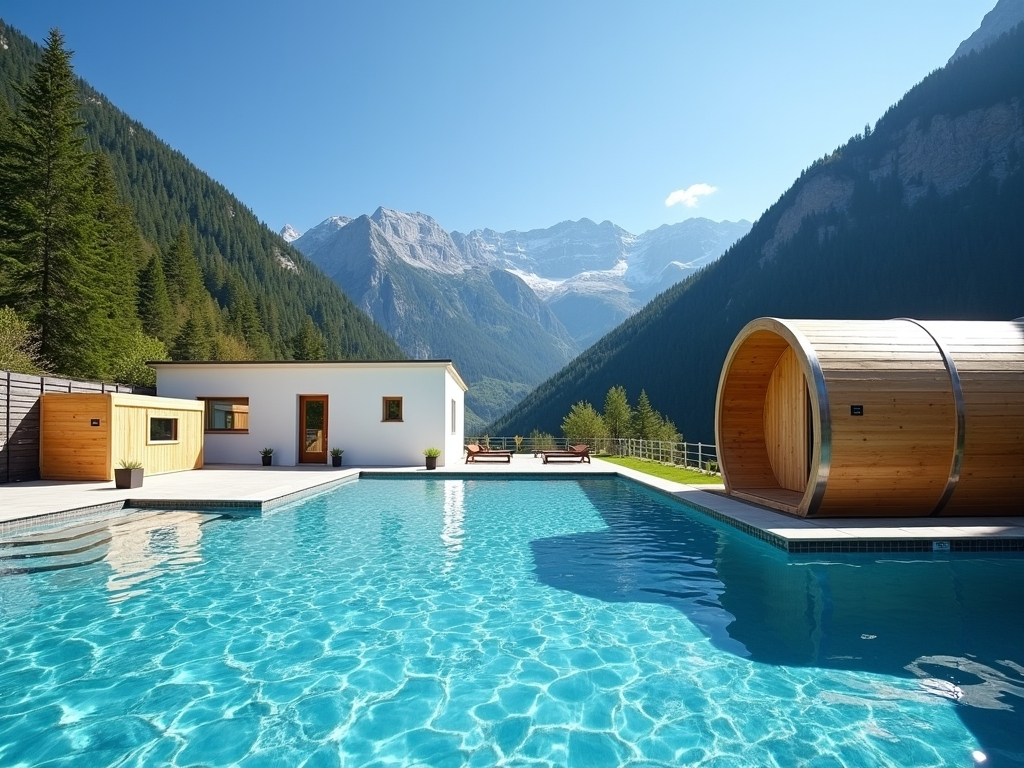
Fortunately, there is a perfect alternative nearby: Les Thermes de Saint-Gervais, reached either by road or on a free cog lift descending the hillside. The baths have been welcoming tired limbs since 1806, when notary Joseph-Marie Gontard identified the springs. Mineral-rich water containing sulphur, magnesium, calcium and zinc rises naturally at 39C and supplies a three-hour spa circuit.
We float between pools at varying temperatures, drift from sauna to steam room, explore the rainforest spa and soak outside while powerful water jets knead our shoulders. Above us, the gondola moves quietly across the slope. With that view, the rain hardly matters.
When we leave, the storm has blown through, allowing us to continue towards Saint-Nicolas. From there, a demanding two-hour path climbs to Refuge du Mont-Joly, a wooden inn more than a century old, scented with smoke from the fire and cheese melting in the kitchen. On a clear day, the terrace looks towards Mont Blanc, though the peaks remain hidden behind cloud during our visit.
We cannot see the high mountains, but we can certainly eat their bounty, beginning with a tartiflette large enough for a wrestler and ending with an enormous slice of blueberry tart. As I eat, snow starts to fall. By the next morning, the late-summer sun will have melted it away. For now, though, it settles thickly beyond the windows, softening everything into white and making the landscape feel as though a winter fairy tale could begin at any moment. That is autumn in the Alps.
Rooms at Coeur des Neiges start from €108 on a room-only basis, while Plan B in Le Fayet offers room-only stays from €76. Refuge du Mont-Joly closes from late March to late May, and again from November until mid-December.
The Tramway du Mont Blanc now reaches the Nid d’Aigle viewpoint at 2,380 metres, following an extension of the line completed in July.