10 of Europe’s finest mountain huts: bunkrooms, bothies and good cheer
Cabaña Verónica, Spain
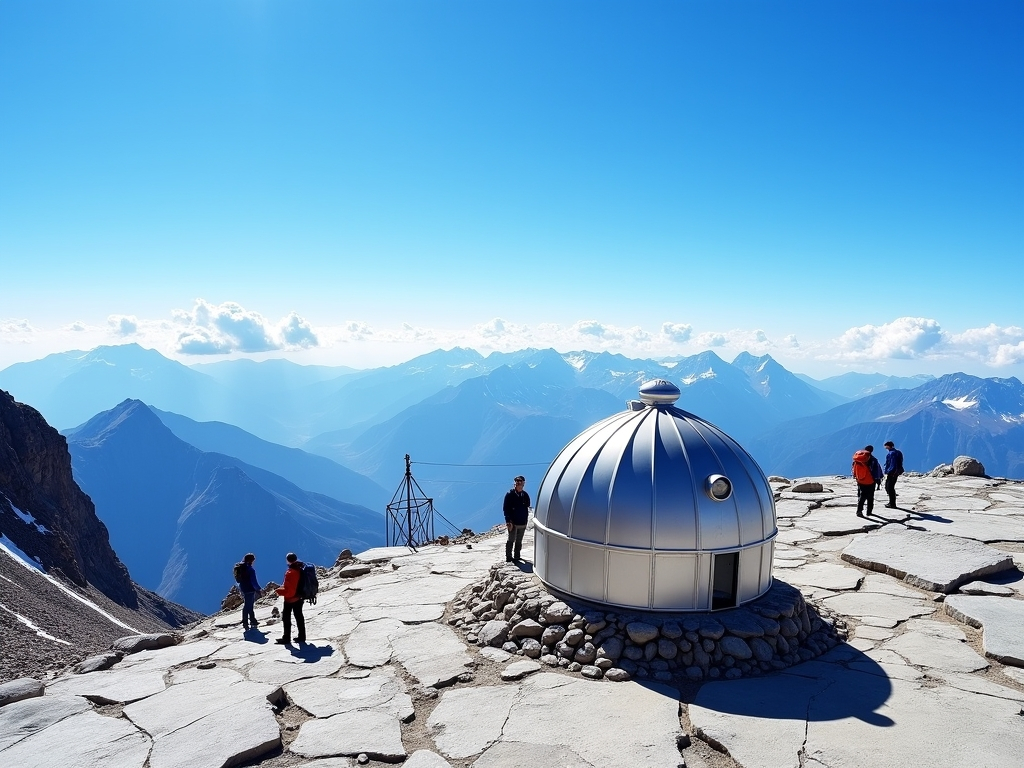
For me, a proper mountain shelter should be compact, reached only after a demanding walk, and preferably come with an unusual story. Cabaña Verónica, high in the Picos de Europa, meets every requirement. Sleeping six people at 2,325 metres, it takes around two hours to reach from the nearest cable-car station, let alone from any road. The panorama is extraordinary, and the welcoming warden keeps the refuge in excellent shape. Its greatest appeal, though, is its past life: the hut was once a gun turret from a US naval battleship dismantled in Bilbao in 1960. Engineer Conrado Senties arranged for it to be hauled uphill by horse and rebuilt on an isolated rocky outcrop. There is no need to question the logic; the sheer oddness is part of the joy. €15
Låktatjåkko, Sweden
This remarkable hut lies just over 100 miles north of the Arctic Circle, 1,228 metres up the mountain, and offers another key ingredient of a memorable refuge: warmth and companionship amid unforgiving surroundings. During my visit, the building was difficult to spot beneath a crust of ice and deep snow. Inside, the wood-lined lounge is wonderfully welcoming, with a fire, old books about Arctic travellers including Fridtjof Nansen, and no mobile signal to interrupt the atmosphere. The kitchen produces an endless supply of waffles with cloudberry jam and cream, alongside heartier meals. Winter visitors should be prepared, though: getting snowed in is entirely possible, while skiing can be demanding in severe cold and rapidly shifting mountain weather. From 515 Swedish kronor (£40)
Gaustatoppen, Norway
Like many shelters managed by the excellent Norwegian Trekking Association, this hut is modest, traditional and efficiently run. What makes it exceptional is the approach. Visitors enter the mountain itself and ride an old-fashioned funicular for one kilometre through solid granite. After that come passages lined with military concrete, a heavy blast-proof steel door, and a short descent to the hut. This extraordinary route is a remnant of a cold war Nato communications base, now also serving as a museum and an underground access point to the refuge, which dates from 1893. It means the hut can open on winter weekends atop Gaustatoppen, Telemark’s highest mountain, where guests can ski back down. In thick cloud, views may be almost nonexistent; on a clear day, it is said that one-sixth of Norway can be seen. From 1,550 Norwegian kroner (£122)
Chata pod Rysmi, Slovakia
The Tatra range has plenty of fine mountain huts, but this is my favourite. It sits close enough to the 2,501-metre summit of Rysy to make an early dawn climb realistic, while still providing a simple, traditional and carefully managed place to rest. Conditions in these mountains can turn fierce in any season, making its position especially valuable as a real refuge from the elements. Although the hut dates back to 1933, it looks more recent because avalanches and falling rock have destroyed it several times. That exposure also explains its short operating season, from 1 June until 31 October. €65
Kredarica on Triglav, Slovenia
In many respects, Kredarica is a classic old-style alpine refuge, yet it has one enormous advantage: it is the final possible overnight stop before the summit of Triglav, Slovenia’s highest mountain at 2,864 metres. Since climbing Triglav is seen by many Slovenes as something to do at least once in life, the hut can become very busy in summer, helped by its tremendous views. More committed mountaineers appreciate its stripped-back winter character. At that time, the dormitories are cold sleeping spaces for climbers preparing for the final, more technical push to the top, where crampons and an ice axe are essential. €30 half-board
Le Refuge de Ciottulu di Mori, Corsica
Part of the charm of Corsica’s demanding GR20 trail is its unapologetically traditional network of mountain refuges. This is not a place for polished comforts or instant rescues when supplies run low; it is direct, mule-supported mountain hospitality. Ciottulu captures that spirit perfectly, with a plain dining room and a dormitory of shared sleeping platforms for 26 people. Its character feels closer to a rough bothy than a conventional alpine lodge, set at 2,000 metres amid a huge, rocky landscape and overseen by a caretaker whose manner can be somewhat unpredictable. €15
Breiðuvik, Iceland
Eastern Iceland has a scattered collection of excellent huts, and Breiðuvik is among the most appealing. Unlike many highland refuges, it stands beside the coast, with standard bunk rooms and a well-equipped kitchen for guests. Its greatest asset is the setting: a remote, windswept shore of black volcanic beaches, empty settlements and wide-open skies. Breiðuvik is one of 40 locations in a practical accommodation network operated by the Icelandic Touring Association, making it a useful base for exploring this wild part of the country. 11,500 Icelandic kronur (£70)
Scotland’s mountain bothies
Britain has generally resisted the continental instinct to build comfortable lodges on mountaintops. We seem more willing to sit in damp waterproofs and eat sandwiches that have gone soft in the rain. The Mountain Bothy Association has done something to soften that hardship, though never enough to spoil the experience. Most bothies are former homes for shepherds, miners or estate workers, and many now have a fireplace or wood-burning stove. Some contain a few leftover provisions, placed there by earlier visitors. I am especially fond of the rougher examples, where the facilities may amount to little more than a stone ledge and an open entrance. A handful have suffered from excessive use and visitors unwilling to share tasks, tidy up or respect the simple bothy code. For that reason, it is best not to single out one location: the list includes many genuine classics. Go and seek them out.
Rifugio Nuvolau, Italy
The Dolomites have no shortage of outstanding refuges, and Nuvolau is among the finest. Reached only on foot, it was first built in 1883 through the generosity of Baron Richard von Meerheimb, who coined the word “psychodrama” — perhaps after seeing one of Nuvolau’s celebrated sunsets. Its flawless position is known for dramatic changes in light and colour across the surrounding peaks. Indoors, there is a dining room serving very good food, including a three-course evening meal, while upstairs a small dormitory provides simple accommodation. €51 bed and breakfast
Rifugio Lagazuoi, Italy
Many Dolomite refuges have adapted to survive by welcoming tourists as well as walkers and climbers. Lagazuoi is one such place. Originally created as a climbers’ shelter, it has gradually expanded and is now linked to the valley by cable car, allowing larger groups to visit and stay. Even so, it remains a magnificent mountain base. Its south-facing terrace is a wonderful place to linger, and superb walking routes lead in every direction, including through the tunnels and terraces of the first world war battlefield below the cliffs. Mount Lagazuoi, at 2,835 metres, was once part of the front between Italian and Austro-Hungarian forces. In 1965, local Alpine guide and climbing pioneer Ugo Pompanin saw the site’s potential and built the first hut. After later extensions, it is still run with great care by his son, Guido. From €85 with breakfast