Which Colors Scare Birds and Can They See Glass? An Expert's Surprising Answer
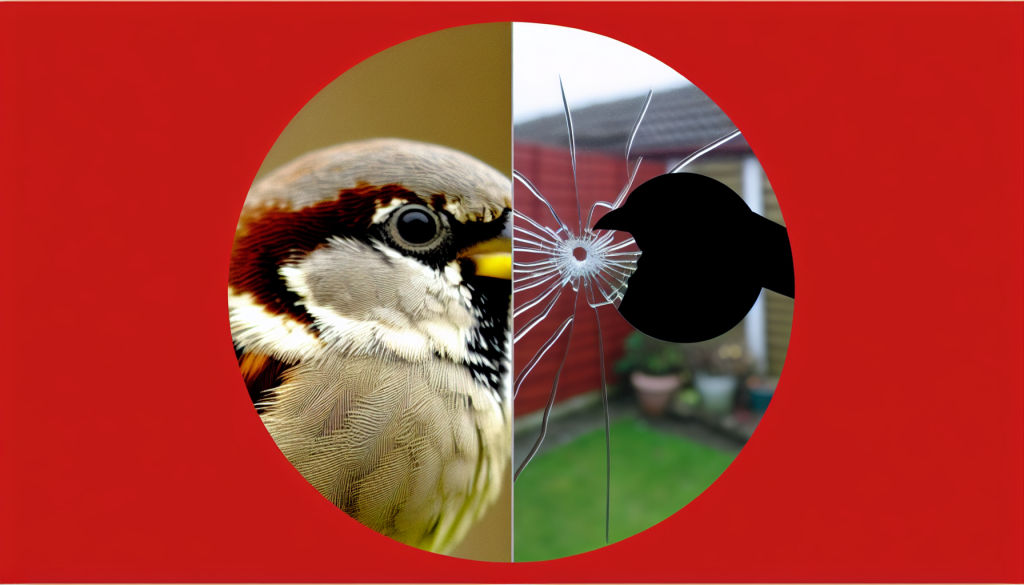
Birds often cannot detect glass surfaces, which makes them vulnerable to collisions. As a result, they may become easy prey for predators, explained Vitalii Liaskivskyi, head of the "Birds" department at the Kyiv Zoo.
According to the expert, heavy rain can also pose a threat to birds. Even waterfowl, such as weakened ducks, may drown if they become thoroughly soaked during prolonged cold rainstorms.
Can birds see at night? What about common urban birds like crows, sparrows, and pigeons?
Nocturnal predators like owls have excellent night vision and are well-adapted to hunting in low light. Their activity typically begins at sunset and continues until dawn. During twilight, they still manage to hunt successfully and then rest afterward.
Daytime birds such as crows, sparrows, and pigeons are well-suited to daylight but struggle with visibility at night. In darkness, their ability to navigate is impaired, and sudden disturbances during roosting can cause chaos. In these situations, birds may fly unpredictably and sometimes collide with windows or other obstacles.
Does street lighting assist birds at night?
Artificial lighting can help birds in urban environments see their surroundings and avoid obstacles. Birds living in the wild outside city areas rely on moonlight. Natural illumination allows them to spot threats and seek safe shelter if disturbed during the night.
Are birds able to see colors, and which ones can they distinguish?
Birds perceive a broad range of colors, similar to humans, but with enhanced sensitivity to ultraviolet (UV) light. They can spot UV markings on feathers and flowers that are invisible to us. As a result, the world appears far more vivid to them.
Nocturnal birds of prey, however, experience decreased color perception in darkness. They retain sharp vision at night, but the intensity of colors fades.
Is there a color that birds avoid?
In the wild, red often signals danger. Many bird species display red elements in their plumage as a warning to predators. In nature, red can imply that something is toxic or unpalatable. Birds view red even more intensely than people and may interpret it as a potential threat.
Can birds perceive glass?
Unfortunately, birds do not recognize glass as a barrier. At the Kyiv Zoo, silhouettes of predatory birds are placed on aviary windows to help prevent smaller birds like sparrows, who might scatter during danger, from flying into the invisible glass. These decals trick birds into believing there's a predator nearby, prompting them to fly in a different direction rather than into the glass.
When startled, such as by a predator, birds scatter. If one doesn't spot the glass in time, it might collide and be momentarily stunned. In that brief state of vulnerability, it risks being captured by a predator.
To minimize such incidents, it's recommended to place decals resembling birds of prey on large glass surfaces. These serve as a visual warning, helping small birds avoid accidents.
Do birds enjoy rain, and can they fly with wet feathers?
Birds tend to enjoy light, warm rain in the summer, often using it to clean themselves, similar to taking a shower. However, cold and prolonged downpours are another story. Heavy rain can cause feathers to become waterlogged, which hinders flight and increases the energy birds must expend to stay warm.
When their feathers become soaked and they lack the energy to recover, birds may temporarily lose the ability to fly. Even aquatic birds, if weakened, can drown if their plumage no longer repels water.
Therefore, during extended periods of rain, it’s advisable not to disturb birds resting in dry spots. It’s important they have time to dry off and groom themselves safely.
The information was provided by the head of the “Birds” department at the Kyiv Zoo, who studied biology at Taras Shevchenko National University of Kyiv. He began working at the zoo during his university years and has over 20 years of experience in the field.