Lebanon's parliament makes another attempt to elect a president after 12 failed efforts in 2 years
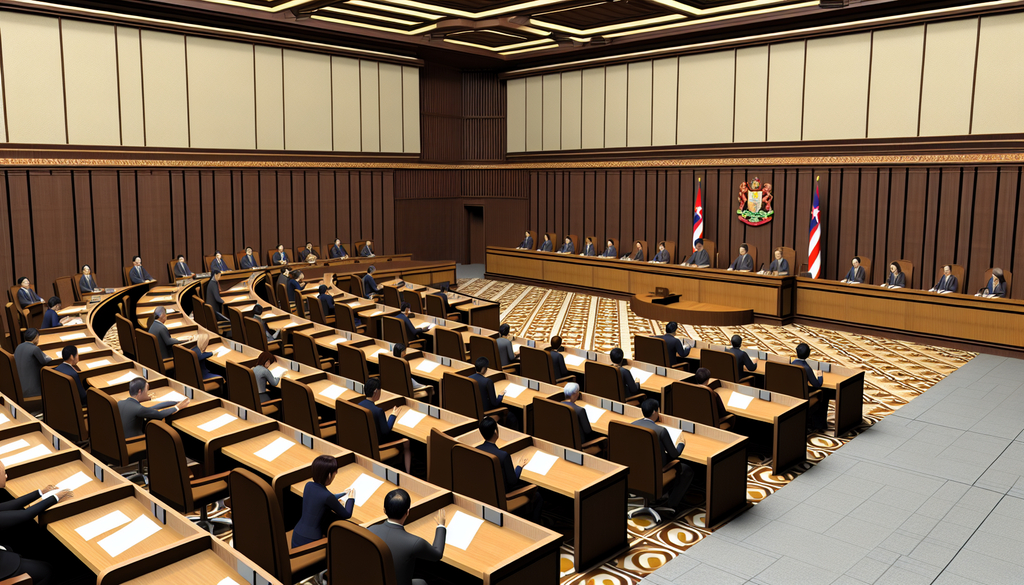
BEIRUT (AP) — On Thursday, Lebanon’s parliament gathered once more to attempt solving the prolonged presidential vacancy, which has gone unresolved for over two years.
Despite 12 previous unsuccessful attempts to elect a successor for former President Michel Aoun, whose term ended in October 2022, there is cautious optimism that this latest vote may finally produce a leader.
The frontrunner this time is Lebanese army chief Joseph Aoun, unrelated to the former president. Joseph Aoun is widely regarded as the favored candidate of both the United States and Saudi Arabia. Their support will be vital as Lebanon works to reconstruct itself after a 14-month war between Israel and Hezbollah, a powerful Lebanese militant group.
Historically, Hezbollah had supported Suleiman Frangieh, a northern Lebanon-based Christian party leader with strong ties to Syria’s former president, Bashar Assad.
Yet, on Wednesday, Frangieh officially stepped out of the race and threw his support behind Joseph Aoun, seemingly paving the way for the military commander’s election. That same evening, the Lebanese Forces, a leading anti-Hezbollah bloc in parliament, also backed Aoun’s candidacy.
For Thursday’s vote, all 128 lawmakers were in attendance.
Lebanon’s complex sectarian power-sharing arrangement frequently leads to political and procedural gridlock. The country has weathered several lengthy presidential vacancies, the most protracted stretching from May 2014 to October 2016—2 1/2 years—before Michel Aoun ultimately secured the presidency.
Joseph Aoun, as the acting army commander, faces a constitutional ban on pursuing the presidency. While exceptions have been made in the past, this restriction introduces further procedural obstacles for his candidacy.
Ordinarily, Lebanon’s constitution allows a president to be elected with a two-thirds majority in the parliament’s first round of voting, or a simple majority in subsequent rounds. However, given the constitutional challenges around Joseph Aoun’s bid, he would need to secure a two-thirds majority in every round.
Other presidential contenders include Jihad Azour, a former finance minister now overseeing the Middle East and Central Asia Department at the International Monetary Fund, and Elias al-Baysari, the acting head of Lebanon’s General Security agency. On Thursday, al-Baysari announced his withdrawal from the race.
The election of a president is critical since only a president can appoint a permanent prime minister and government. For the past two years, the caretaker administration operating in Lebanon has had diminished authority due to its lack of presidential appointment.
The incoming government will face enormous challenges. Beyond implementing the ceasefire from the Israel-Hezbollah conflict and sourcing reconstruction funds, it must address a severe economic meltdown.
Lebanon is now in its sixth year of an economic crisis that has rendered its currency nearly worthless and obliterated the savings of countless citizens. Moreover, the state electricity company can only provide a few hours of power daily due to a critical lack of resources.
A preliminary agreement for an International Monetary Fund bailout was reached in 2022, yet Lebanese leaders have made minimal strides in implementing the required reforms to unlock the financial aid.