Russian Frigate Attacked NATO Helicopter: Alliance Warns of Escalation
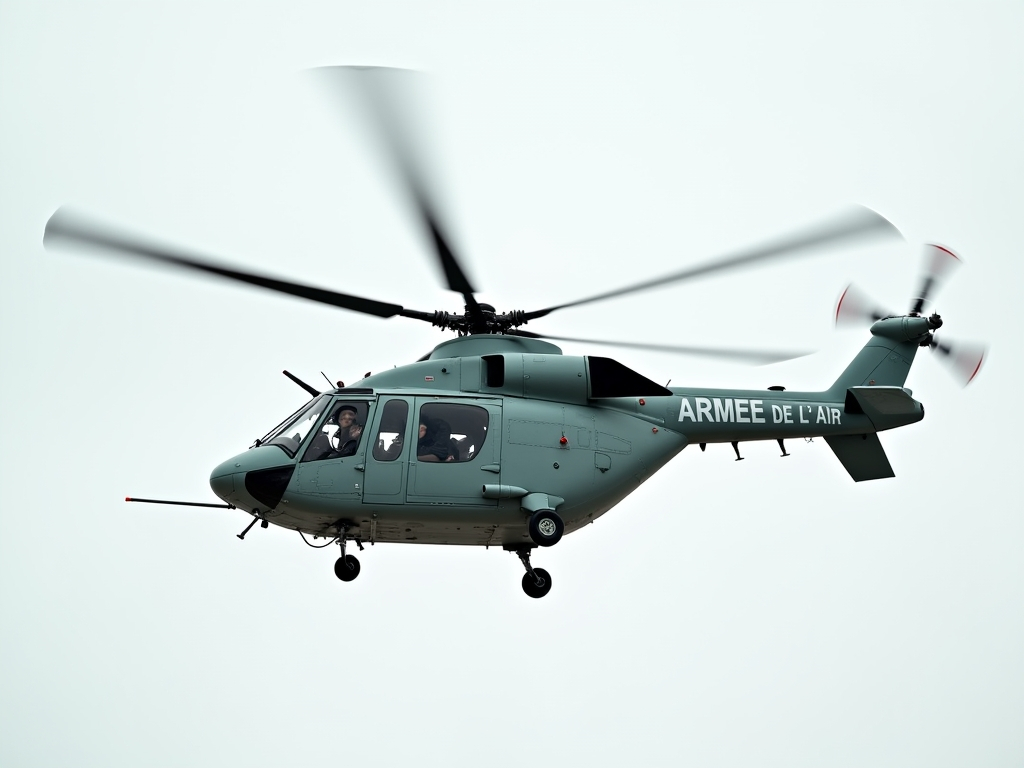
A Russian frigate fired signal flares toward a Danish Armed Forces helicopter near Gedser, according to Danish media reports citing the country’s Ministry of Defence.
The incident involved a Danish Air Force Fennec helicopter. It reportedly occurred during a routine mission to photograph the Russian frigate, which was sailing in international waters.
Denmark’s Defence Ministry said that the Russian vessel launched two signal flares in the helicopter’s direction. One of them passed dangerously close to the aircraft.
Signal flares are pyrotechnic devices commonly used at sea to send warnings, attract attention, or communicate with nearby vessels and aircraft.
Danish Defence Minister Troels Lund Poulsen responded to the incident, saying that Denmark would summon the Russian ambassador for talks.
“Denmark views this incident with great seriousness. We have not experienced this kind of event before, and it indicates that Russia is becoming increasingly willing to take risks. That is why we are calling in the Russian ambassador for a meeting,” the minister said.
At the same time, Kenneth Øhlenschlæger Buhl, a military analyst at the Centre for Military Studies at the University of Copenhagen, said the episode could not be considered an attack under international law because no conventional weapons were used.
“Nevertheless, this was clearly an unfriendly action intended to force the helicopter to keep its distance, even though both the frigate and the helicopter had the right to be in the area. This is a serious development. Danish forces have long photographed Russian ships passing through Danish waters, and such encounters were previously peaceful. Therefore, this represents an escalation,” the analyst said.
Russian drone over Lithuania
During the night of September 15, a NATO fighter jet shot down a drone over Lithuania, the country’s National Crisis Management Centre reported. According to a centre representative, the unmanned aircraft, which may have entered from Belarus, was brought down near the village of Pratkūnai outside Kaunas, Lithuania’s second-largest city.
This was the first drone over Lithuania to be shot down by NATO aviation.
The Lithuanian military said the drone was intercepted by Italian allied fighter jets that took off from the air base in Šiauliai. Debris from the unmanned aircraft was found at the site, where military personnel and police officers are now working.
Earlier, reports said that Denmark was preparing for the possible mobilization of 180,000 personnel in the event of war. The reserve force would reportedly consist of fully trained conscripts who complete an 11-month term of service in the Danish Armed Forces. Up to 13,000 people could be called up each year, while the mobilization pool would include men and women up to the age of 65.