
Fresh DNA study sheds light on the enigma of the ‘lost prince’ Kaspar Hauser
Subscribe to CNN’s Wonder Theory science newsletter for a journey into the cosmos, with insights on groundbreaking discoveries, scientific innovations, and more.
"His origins unknown, his death a mystery."
This is the (translated) inscription on the tombstone of Kaspar Hauser, a similarly mysterious figure who passed away in 1833. Almost two centuries later, researchers have at last resolved a long-standing riddle concerning Hauser’s rumored connections to German nobility.
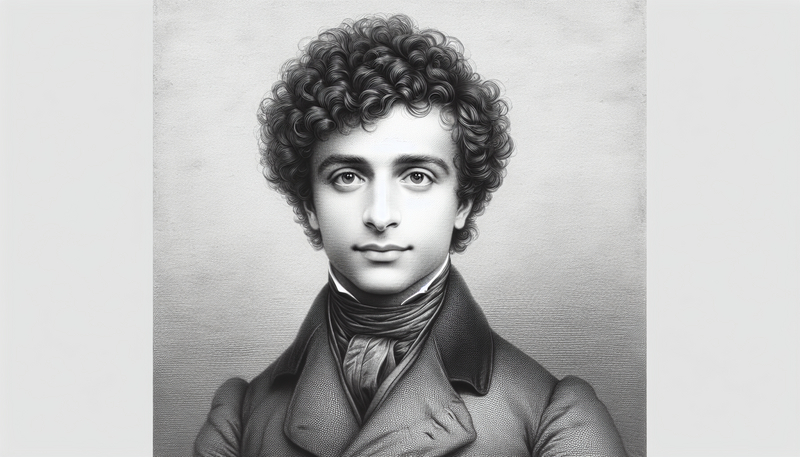
On May 26, 1828, Hauser appeared in Nuremberg — located in present-day Germany — as a seemingly abandoned 16-year-old boy. He wandered into the town’s main square with no form of identification, gripping an unsigned letter.
The note, combined with Hauser’s scattered recollections, revealed a chilling story: He had grown up confined in a tiny, dark cell, tended to by an unseen patron who ensured he was fed and clean. By the time he surfaced in the public eye, Hauser could barely scrawl his name and struggled to converse with local authorities.
Related article: Ancient DNA exposes a long-buried family scandal from Jamestown, over 400 years later
A fantastical narrative soon took hold. Hauser was rumored to be a kidnapped royal, possibly the prince of the House of Baden — a sovereign family from what is now southwestern Germany. Though no concrete evidence ever supported this theory, the rumors persisted, turning Hauser into a social sensation across European high society.
Efforts continued long after Hauser’s death to find any proof linking him to royal heritage. In the 1990s, blood samples suggested Hauser wasn’t from the Baden line. However, this conclusion was soon challenged by conflicting results from hair samples tested a few years afterward.
Recently, a definitive answer has emerged, thanks to a fresh investigation using more advanced techniques to study Hauser’s hair. The study, presented in the journal iScience, employed technology initially created for Neanderthal DNA analysis, which proved more accurate than earlier methods.
The researchers examined Hauser’s mitochondrial DNA (mtDNA), a genetic material passed through the maternal line. Their results confirmed that Hauser’s mtDNA did not match that of the Baden family, finally ruling out any claim that Hauser was a displaced noble.
"This work is a prime example of how molecular genetics can illuminate historical enigmas," said Dr. Dmitry Temiakov, a professor of biochemistry and molecular biology at Thomas Jefferson University in Philadelphia.
Temiakov, who was not part of the research team, described the study as comprehensive, saying, "It revisits all prior findings, reconciles the inconsistencies in previous DNA results, and presents new robust data to evaluate the probability of any role lineage connections."
Cracking DNA Mysteries
According to Dr. Walther Parson, a lead study author and forensic biologist with the Austrian Federal Ministry of the Interior’s National DNA Database Laboratory, the team has spent almost 20 years refining techniques to analyze highly compromised DNA.
Initially, the researchers revisited earlier studies. In 1996, Munich researchers tested mtDNA from bloodstains on Hauser’s undergarments (a relic from the assassination that ended his life). That initial test suggested no genetic link to the Baden family. However, proponents of the “lost prince” theory later argued that the blood sample might not have been Hauser’s due to speculation that the stains had been refreshed by museum curators aiming to enhance its display.
"It was rumored that the bloodstain’s color had been improved, potentially with newer blood that didn’t belong to Hauser," Parson explained.
In the 2000s, yet another lab in Münster, Germany, performed tests on Hauser’s hair, yielding a different outcome — a strong match to the Badens’ mtDNA, thus contradicting the previous blood test.
"It created an unresolved deadlock," Parson noted.
The Royal Myth Dispelled
Parson’s team took a fresh look at Hauser’s hair, using strands collected both before and just after his death. These samples, being meticulously preserved, were more reliable than the bloodstains. Additionally, their advanced methods allowed for precise extraction of mtDNA from the hair shaft, which minimized contamination.
"Our enhanced sequencing technique enabled us to extract viable DNA from the badly deteriorated hair samples," Parson explained. The result not only confirmed the blood analysis from 1996 but also firmly established that Hauser’s mtDNA was type W, while the mtDNA from the Baden family was type H.
Related article: DNA from unmarked graves unearths family secrets of George Washington
"This breakthrough alters the narrative, as the hair samples now align with the blood sample findings," Parson remarked.
The research team then sought further verification by sending samples to a third lab in Potsdam, Germany, which specializes in ancient DNA. Without disclosing the sample's origins to the scientists, the lab returned the same result — Hauser’s hair showed a type W mitotype.
"These consistent findings across multiple labs further strengthen the study’s conclusions," noted Dr. Temiakov.
The Puzzle Endures
One version of the “prince theory” posits that Hauser was the son of Grand Duke Carl and Grand Duchess Stéphanie de Beauharnais. Officially, the royal couple’s newborn son, born on September 29, 1812, passed away just days after birth.
However, some alleged that the baby who died was someone else, secretly switched with another infant by Carl’s stepmother, Countess Louise Caroline von Hochberg. According to this theory, the true royal child, who later became Kaspar Hauser, was hidden away. When the couple was unable to produce a male heir, one of the Countess’s sons eventually took over the duchy.
Related article: Scientists disprove contentious theories about Easter Island's history
The new findings debunk the notion that Hauser was this “lost prince.” As Parson explained, it also highlights the importance of refining DNA analysis techniques. "These breakthroughs have significant implications for investigating mtDNA in forensic cases," he added.
But if not a prince, who was Kaspar Hauser? Unfortunately, mtDNA offers limited insight, identifying only that he belonged to Western European ancestry.
Hauser’s gravestone in the Ansbach cemetery still reads, "the riddle of his time." Though some pieces have been clarified, the mystery of his identity remains unsolved.
— Mindy Weisberger is a science journalist who has contributed to Live Science, Scientific American, and How It Works magazine.



