
Ancient Maya city unearthed in Mexico
Subscribe to CNN’s Wonder Theory science newsletter for insights into the cosmos and groundbreaking discoveries in the world of science.
For over a millennium, the dense forests of the Mexican state of Campeche cloaked a remarkable ancient history.
The region, long regarded as an archaeological “blank spot” within the Maya Lowlands — an area stretching across present-day Belize, El Salvador, Guatemala, and southeastern Mexico — was home to the Maya civilization from around 1000 BC to AD 1500.
However, the veil has now been partially lifted. Archaeologists have uncovered thousands of previously hidden Maya structures, including a sprawling urban city they’ve named Valeriana, taking its title from a nearby lagoon, as detailed in a recent edition of the journal Antiquity.
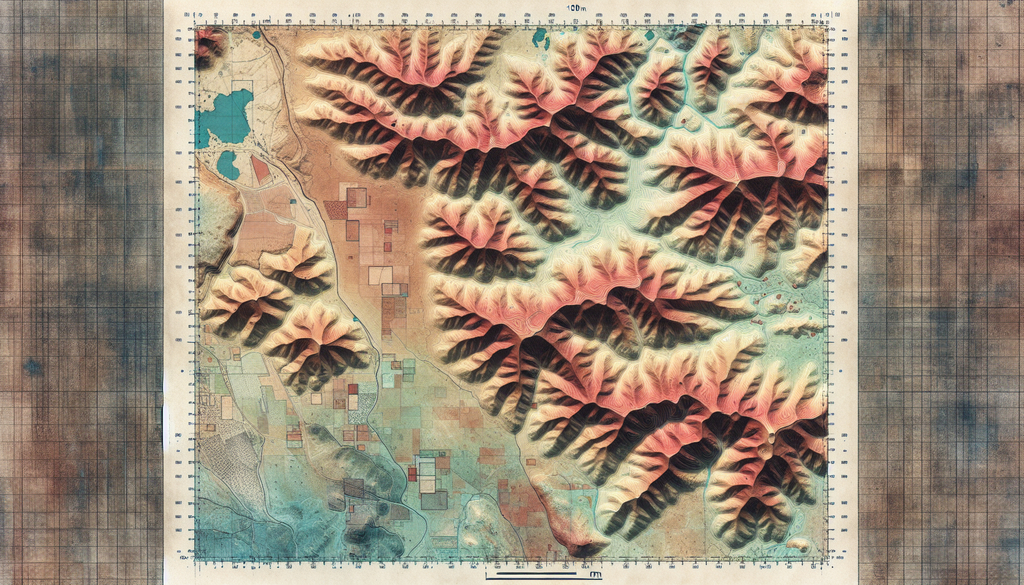
This major discovery was made possible not through excavation but by using LiDAR technology (Light Detection and Ranging), a method that allowed researchers to map the forested areas of eastern Campeche from nearly 2,000 miles away. The scans, covering roughly 47 square miles (122 square kilometers), revealed Maya ruins beneath the thick jungle foliage. Interestingly, the LiDAR data was originally gathered in 2013 for a conservation project run by The Nature Conservancy of Mexico.
Related article: Lost Silk Road cities mapped using remote sensing
Much like other significant Maya city centers, Valeriana boasts a reservoir, a ball court, temple pyramids, and wide roads that connect enclosure plazas. In total, the research team identified 6,764 structures spread across Valeriana’s urban expanse and other smaller surrounding settlements. The density of these settlements mirrors that of other well-known Maya sites in the Lowlands, which archaeologists long believed housed numerous yet undiscovered ruins in Campeche dating as far back as the 1940s.
“It was both astonishing and, at the same time, it matched my expectations,” said lead researcher Luke Auld-Thomas, who pursued the project as part of his Ph.D. in anthropology at Tulane University.
“From what I’ve gathered about the Maya Lowlands, if you randomly chose a point, you’d likely hit an urban settlement,” Auld-Thomas noted. “It’s incredibly rewarding to have those hunches confirmed.”
Interconnected Cities
Encapsulated by regions rich with Maya history, Campeche has remained a relatively underexplored area compared to its neighbors — the better-known northern Yucatán and the southern Maya Lowlands, according to Marcello Canuto, another coauthor of the study and professor at Tulane University.
The striking ruins of Chichén Itzá, for example, dominate the Yucatán’s landscape, making them easy to identify. Meanwhile, Maya sites in the southern Lowlands have long fascinated scholars because of their texts, hieroglyphs, and altars, Canuto explained.
Related article: Who were the victims of Maya sacrifice? Ancient DNA offers answers
For many years, Campeche’s inaccessibility and lack of distinct artifacts resulted in it being overlooked by researchers. But recent breakthroughs in LiDAR technology are shifting that narrative.
“We’re experiencing a whole new era in our ability to explore areas that were once unreachable,” Canuto remarked.
Additionally, these scans are revealing the intricate web of connections between Maya cities, offering deeper insights into the social and organizational complexity of their civilization, says Carlos Morales-Aguilar, a landscape archaeologist at the University of Texas at Austin. Morales-Aguilar, who wasn’t involved in the research, emphasized that the concentration of remains suggests the Maya were adept at managing their environment, utilizing elaborate networks of roads, terraces, and fortifications.
“This study also highlights how the Maya ingeniously adapted their infrastructure to incorporate features like sinkholes, ridges, and natural depressions,” Morales-Aguilar said, adding that the new findings effectively challenge the idea of isolated Maya city-states, pointing instead to a vast, interconnected network of both urban and rural areas during their flourishing periods.
Related article: Collapse of Maya dynasty found within pyramid: excavation yields fresh clues
‘The LiDAR Revolution’
As more LiDAR scans come to light, it’s increasingly clear that this technology will revolutionize our understanding of the scale and diversity of ancient Maya society, according to Tomás Gallareta Cervera, an assistant professor of anthropology at Kenyon College.
“LiDAR analysis has brought new depth to urban and settlement studies—many are referring to this as the ‘LiDAR revolution,’” Gallareta Cervera said in an email. “This cutting-edge approach is allowing archaeologists to better understand how the Maya adapted and thrived in complex environments for millennia, which is truly exciting!”
Related article: Laser scanning reveals hidden Maya city
Though much of Maya civilization has survived for thousands of years, Auld-Thomas stresses that fully recognizing the extent of these ancient settlements is key to their preservation — particularly as new cities await discovery.
“We’re still grappling with what these discoveries mean for our perception of these environments and how we can protect them moving forward. The key is to recognize that people have always played a crucial role in this landscape’s history and will be central to its future preservation as well,” said Auld-Thomas.
Mindy Weisberger is a seasoned science journalist, with bylines in Live Science, Scientific American, and How It Works magazine.



