Hundreds of thousands of devotees gather for the Black Nazarene procession in the Philippines
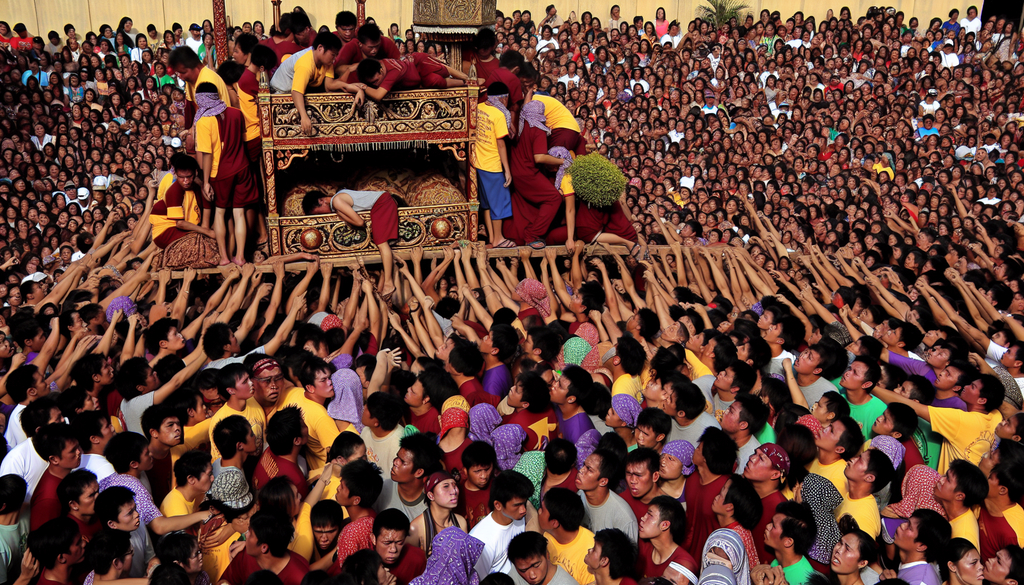
MANILA, Jan 9 (Reuters) - A crowd of hundreds of thousands of barefoot worshippers gathered on Thursday in Manila for the yearly procession of the Black Nazarene, a centuries-old statue of Jesus Christ. This event stands as one of the most grandiose expressions of Catholic faith worldwide.
The streets of the Philippine capital turned into a sea of maroon and gold as throngs of devoted followers surrounded the Black Nazarene—a life-sized image of Jesus carrying a cross. Many jostled to touch or pull the thick rope hauling the carriage that transported the sacred statue through the city.
Organizers of the event reported that roughly 220,000 people participated in mass before the procession began. By midday (0400 GMT), the crowd swelled to over 190,000 participants marching or gathered near the church, with the number expected to increase as the procession navigated its 5.8 km (3.6 mile) route.
Among the devotees was 79-year-old Victoriano Tayuni, a lifelong follower of the Black Nazarene. He led a group of faithful companions, emphasizing how this tradition had strengthened their devotion.
"I’ve never seen someone’s life worsen because of joining us. Everyone’s lives have only improved, which is why more and more people participate each year," Tayuni shared.
Rowena Bustamante, a 56-year-old seamstress, proudly revealed that she had named her daughter after the sacred image.
"I confide all my problems to Him, especially those concerning my child, Nazarena. That’s why she’s named after the Black Nazarene," she explained.
Some worshippers tossed white towels toward the statue, which marshals used to wipe its surface, believing these actions would bless them or heal their ailments. Meanwhile, a number of devotees broke through police barricades in hopes of moving closer to the sacred image during the initial stages of the procession.
Nearly 80% of the Philippine population identifies as Roman Catholic, a religious tradition deeply rooted in Spanish colonial influence, which lasted over three centuries in the archipelago.
In 2019, the late Filipino priest and theologian Sabino Vengco clarified that the Black Nazarene’s revered dark color is tied to the mesquite wood from which it was crafted. This contradicts the long-standing myth that its blackened hue came from a fire aboard the ship that transported the statue from Mexico to the Philippines in the early 17th century.
The procession, known as the "traslacion" or "translation," marks the historic transfer of the Black Nazarene from a church in the old Spanish capital of Intramuros to its current home at Quiapo Church.
During a homily delivered before the procession began, Cardinal Jose Advincula, the archbishop of Manila, urged the faithful to reject sin, selfishness, and harmful habits, and instead live a Christ-centered life.
"Let us follow His commandments, embrace His teachings, and live by His example. It is far better to walk in the path of our Beloved Lord," Cardinal Advincula proclaimed.