Could this be the planet’s most jaw-dropping eatery? A stunning design wonder nestled in a Leipzig industrial zone
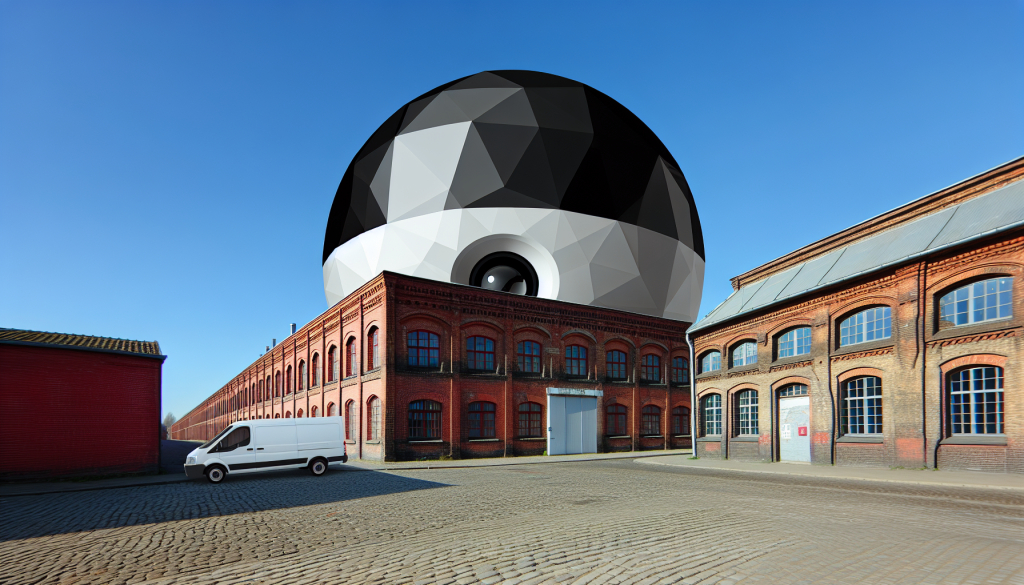
Amid the weathered brick buildings of an industrial district in eastern Leipzig, Germany, an enormous white globe seems to float above a historic boiler house. Its appearance stirs the imagination — is it a cosmic satellite, a futuristic structure, or an oversized celestial orb?
This impressive 12-meter structure, known as the Niemeyer Sphere, is the final project envisioned by acclaimed Brazilian architect Oscar Niemeyer. It’s a remarkable addition to his portfolio, embodying his passion for innovation and modernist design. Located in a modest, working-class neighborhood surrounded by car lots and construction businesses, the Sphere feels as if it were beamed in from another world.
Although the Niemeyer Sphere officially opened its doors in June 2020, its birth was a lengthy one, spanning 20 years from concept to completion. German photographer Margret Hoppe followed the development throughout, capturing its transformation over time. Her photographic series, featured in the exhibit “The Spirit of Past Future” at the site, also includes contributions from Armenian artist Nvard Yerkanian.
The exhibition explores modernist architectural themes, displaying arresting images of notable Bauhaus structures — which Niemeyer often found too rigid — alongside works by Le Corbusier, with whom the young Niemeyer once collaborated as a draftsman. The Sphere marks the culmination of Niemeyer’s visionary career.
The story dates back to 1994 when East German state-owned companies were being sold off, often for symbolic prices. West German businessman Ludwig Koehne acquired a heavy machinery plant for just one Deutsche Mark and renamed it Techne Sphere.
“We had an excellent chef in the workers’ cafeteria,” Koehne recalls. “It was always my goal to create a space where his talents could shine in events and fine dining.” He imagined placing a rooftop restaurant above the industrial canteen, using its kitchen for convenience.
In 2007, a business trip to Brazil left Koehne captivated by Niemeyer’s eye-catching works in Brasília — from the Presidential Palace to the stunning Cathedral. Inspired, he wrote to Niemeyer four years later and traveled back to Brazil to meet him. Upon returning, he asked the canteen chef, Tibor Herzigkeit, to stay for another decade. Herzigkeit agreed.
Niemeyer was 103 when he drafted the original design — a floating orb with panoramic windows. Though he passed away in 2012, his initial sketches laid the groundwork. “It felt like a responsibility to realize his vision,” Koehne said of receiving the design from such an esteemed architect.
To develop the project, Koehne teamed up with architect Harald Kern and Niemeyer’s long-time collaborator Jair Valera. By 2017, construction began. Each phase presented unique challenges: from structural complexities to the issue of excessive sunlight penetrating the south-west-facing windows. The team pursued a discreet and design-consistent solution.
The window technology, developed by Merck, wasn’t finalized until 2019. They produced 144 custom-made triangular panes using liquid crystal glass that could transition from light gray to a deep, almost black shade, blending both function and aesthetics seamlessly.
Niemeyer, when accepting the Pritzker Prize in 1988, declared that architecture should combine beauty, imagination, and surprise — and be liberated by technology, not constrained by straight lines and rules.
Curves were Niemeyer’s hallmark. Throughout his career, he drew inspiration from nature, creating flowing forms like the monumental Cathedral of Brasília, with its gracefully arched concrete columns supporting a soaring glass dome.
Concrete and glass were his chosen mediums, yet Niemeyer achieved a remarkable sense of airiness. Inside his buildings, colored glass created rivers of light, casting bursts of green and blue, lending tangible weightlessness to otherwise solid materials.
The Niemeyer Sphere continues this legacy. Its white concrete exterior and dark glass contrast during the day, while at night, the glowing windows stand out. The innovative window panes prevent overheating and manage glare. “They function like a giant pair of sunglasses,” Koehne notes. “As your eyes adjust, you begin to notice cloud details that you’d normally miss. It’s a visual experience designed to heighten your senses.”
Niemeyer had long embraced new technologies. In the 1930s, he designed a Rio de Janeiro nursery with movable panels — an early example of climate-responsive architecture. Valera and Kern believe he would have appreciated the modern crystal-glass innovation used in the Sphere.
The former factory complex now includes two additional galleries and occasionally hosts open-air concerts. The Sphere’s grand opening was marked by a cello performance of a Bach suite, honoring the city’s most iconic composer.
Inside the Sphere, the design spans three levels. The bottom floor houses technical systems, while visitors access the middle floor — a cozy bar serving drinks like kombucha and gin. The panoramic curved window starts beneath the floor and uses cutting-edge technology to control light — much like the systems used in aircraft cabins today.
The upper level invites guests into a refined lounge with designer seating, offering sweeping views across Leipzig. One wall bears a red-lined sketch by Niemeyer, a stylistic signature that adorns many of his buildings. This final work brings together all of Niemeyer’s lifelong passions — form, function, and delight.
“What Oscar aimed for here,” Valera remarked at the unveiling, “was simplicity — not through fewer elements, but through grace and a feeling of effortless elegance, true to his unique style.”
"The Spirit of Past Future" is on view at Techne Sphere Leipzig until 22 March.