The powerful photos that sparked a worldwide ban on whaling
During the 1970s, a handful of Greenpeace activists devised a radical plan to halt commercial whaling once and for all.
A massive Soviet vessel, its harpoon gun prepared to strike, towers over a whale just beneath the bow. Blood seeps from a gaping wound as the cold waters of the Pacific Ocean turn crimson.
This haunting image redefined the fight against whaling and kickstarted Greenpeace’s "mind bomb" campaign, recalls Rex Weyler, the photographer behind the iconic 1975 shot (scroll down to view it).
Weyler was one of the early Greenpeace members who convened in Canada in the '70s. Many of them, including Weyler, had moved from the US to avoid being drafted for the Vietnam War. "It's hard to believe now, but there wasn’t even an ecological movement back then," he remarks. "We had the peace movement, the women’s liberation movement, the civil rights movement – we knew conservation needed to be a global movement, too.”
He first learned about the disastrous fate of the whales through a Canadian author touring with a book on the topic.
"Most people still thought of whaling as this storybook Moby Dick scenario – tiny men in little boats battling enormous whales. The whales were the menace, the Goliath,” Weyler remembers. “We wanted to flip that around. By the '70s, whalers commanded diesel-powered ships and wielded 250lb (113kg) explosive harpoons. We had to capture that new reality."
In the 1960s, whaling had reached its peak, with around 80,000 whales hunted each year. Technological advancements gave whalers the capacity to catch whales faster than ever before.
While regulatory measures aimed at protecting whales existed—most notably the 1937 International Agreement for Whaling Regulation—countries like Russia and Japan often ignored them, engaging in illegal hunts. Between 1900 and 1999, industrial whaling operations killed an estimated 2.9 million large whales, though it’s believed the true figure is far higher.
"By the 1960s, it was evident that global whale populations were rapidly dwindling," says Árni Finnsson, chair of the Iceland Nature Conservation Association and long-time ocean activist who worked with Greenpeace in the early 1990s. "Even though blue whale hunting was outlawed by the International Whaling Commission (IWC) in 1954, regulation was weak and overhunting continued."
According to Finnsson, the 1972 UN Conference on the Human Environment called for a decade-long whaling moratorium. "However, the IWC ignored this call, leading Greenpeace to confront Soviet whalers directly in the Pacific,” he explains.
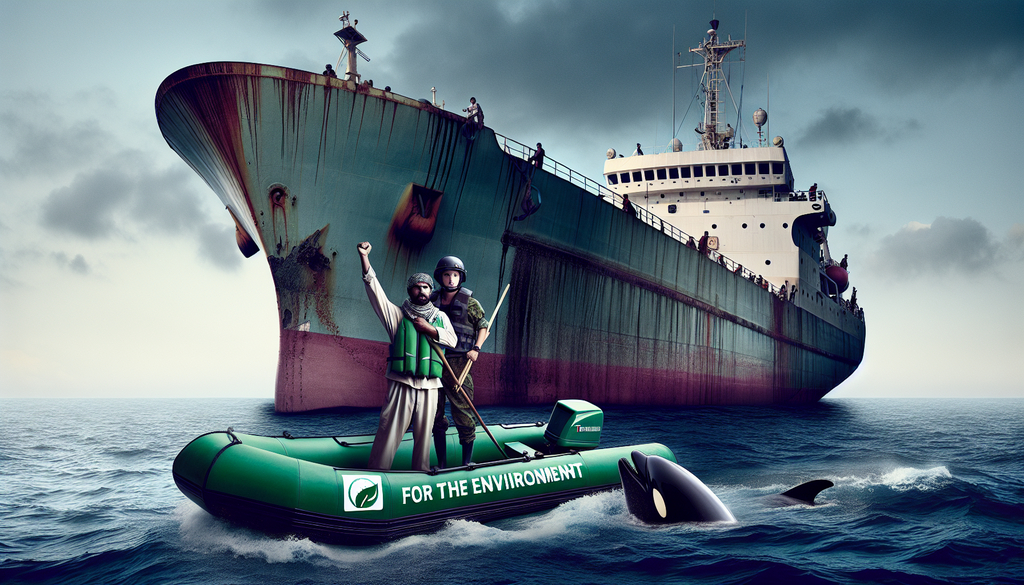
Greenpeace had spent several years preparing a ship and assembling a team. "By 1975, we sailed out in small Zodiac inflatable boats in search of a whaling fleet,” Weyler says. “Our mission was clear: to get between the whales and the harpoons, and capture everything on film. It was all about spreading the message through the media."
Many of the activists had enough experience with media to understand that striking visuals would be essential. That’s how Greenpeace campaigns turned into "mind bombs" – an idea pioneered by Bob Hunter, another key figure in the movement. Hunter believed media could be a delivery system for triggering change. Revolution, in his view, wasn’t about armed struggles – it was about communicating ideas through “mind bombs” rather than actual explosives.
"We knew we had to document the moment profoundly. Every photograph and scene had to be impactful," says Weyler. "The gesture needed to be bold, something that people around the world would see and spark dialogue about the world’s whale populations."
The conditions, however, made capturing footage far from simple. "We had to learn how to use cameras on unsteady, small boats in rough waters," Weyler notes. "We secured ourselves by tying a line around our waists so we could lean back against it, creating stability and minimizing the boat's movements to keep the camera steady."
Catching key images was another huge challenge. "The whales were constantly on the run, surfacing briefly to breathe before darting back into the depths," Weyler recalls. His camera only began capturing meaningful footage after a whale had been struck.
"I was so focused on settings—exposure, shutter speed—that the reality of what unfolded barely hit me at first," he recounts. "But once I lowered the camera, the full gravity of what I’d seen overwhelmed me."
"It was gut-wrenching. We witnessed these whales being harpooned, the sea turned bloody as they thrashed in agony. Watching them die tore us apart,” he admits. “When it was over, standing on the deck, I remember feeling devastated."
Upon their return to San Francisco, Weyler and the crew were met by a swarm of media outlets. "We didn’t expect that level of interest. Everyone wanted the photos,” he says.
The next morning, Weyler eagerly went out to discover whether his shot had made the front page. "I found a newsstand, and there it was – on the front page of nearly every paper. It was everything we had hoped for."
For Weyler, the power of the photographs lay in showing activists taking a stand for more than just human rights, but for the rights of other species, too. “True change comes when people demand it,” he explains. “Our goal was to inspire the masses to direct their governments: 'We must save these animals.' I honestly believe these images played a part in sparking today’s global climate movement."
In the wake of Greenpeace's efforts, the International Whaling Committee officially instituted a commercial whaling moratorium in 1982, with a full ban following in 1985. Species like humpback whales have seen an impressive recovery, with their numbers returning to roughly 93% of pre-hunting levels.
Nonetheless, commercial whaling persists, notably in Iceland, Norway, and Japan.
"Greenpeace’s actions stirred the public," Finnsson states. "In 1982, their campaigns, along with those of other non-profits, were vital in securing the moratorium against commercial whaling, which still holds today."
Want more updates on climate news and positive developments? Sign up for the Future Earth newsletter, and don’t miss The Essential List, delivering curated features and insights twice weekly.