EU unable to recover €150m paid to Tunisia amid links to human rights abuses
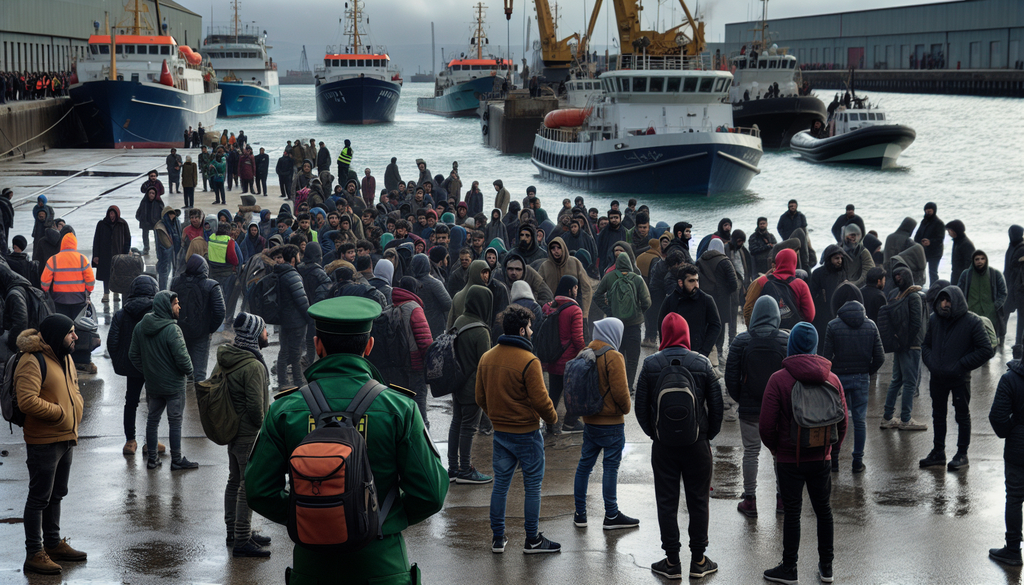
The European Union will not be able to recover any of the €150 million (£125 million) it provided to Tunisia, even though suspicions are mounting that some of the money has been linked to human rights violations, including accusations that it funded security forces involved in abusing migrant women.
The European Commission awarded the funds to Tunisia’s government as part of a contentious migration and development deal. At the time, there were growing concerns that Tunisia was becoming more authoritarian, and there was little accountability for the actions of its police forces.
An investigation by The Guardian last month revealed widespread allegations of abuse by EU-financed Tunisian security forces, including instances of sexual violence against migrants.
What’s more alarming is the recent realization that no mechanism exists to reclaim the funds, even when the money is tied to egregious human rights violations.
As per EU funding regulations, the allocated money should uphold fundamental rights. In fact, in 2021, stricter guidelines were introduced to ensure that EU-backed spending does not infringe on human rights.
Despite this, there was no human rights impact assessment conducted before the EU-Tunisia agreement was signed last year. The €150 million was transferred to Tunisia in March.
Catherine Woollard, the director of the European Council on Refugees and Exiles, warned that human rights abuses are inevitable when such deals are made with authoritarian regimes to block migrants from reaching Europe.
She stated, “These agreements with oppressive governments are not just about externalizing people but also about shifting the responsibility for human rights abuses away from Europe. It’s a way to avoid getting involved directly in the atrocities.”
Tunisia’s president, Kais Saied, a controversial figure, recently secured another five-year term amid widespread condemnation from human rights groups. His victory marks a further shift away from Tunisia’s democratic strides following the Arab Spring, leading the country toward autocracy.
Saied, who has previously been criticized for racist remarks about migrants from sub-Saharan Africa, has raised concerns that newfound abuses could ensue under his government.
The EU’s arrangement with Tunisia — and its compatibility with the bloc’s human rights commitments — is currently under investigation by the EU ombudsman. Emily O’Reilly’s report, expected in the coming weeks, is likely to challenge the deal’s moral threshold and question whether sufficient safeguards exist to halt funding if human rights violations are uncovered.
O'Reilly remarked on the difficulty in tracing the allocation of funds as part of the EU-Tunisia agreement. She asked, “If you learn that the equipment you funded in Tunisia is misused and leads to violations of migrants’ rights, can you recover that money? And if so, how?”
A spokesperson for the European Commission stated that the €150 million was disbursed after Tunisia met “mutually agreed conditions.”
Further intensifying the unease around the deal, the International Criminal Court (ICC) may launch an investigation into the treatment of sub-Saharan migrants by Tunisian authorities.
Any such investigation would heavily embarrass the European Commission, with the case modeled after a similar inquiry into migrant mistreatment in neighboring Libya.
British barrister Rodney Dixon KC filed a submission to the ICC just days after allegations surfaced from The Guardian that Tunisian national guard members were involved in sexual assaults on migrant women and violence against children.
Dixon commented, “We’re aiming to collaborate with the office of the prosecutor at the ICC in the months ahead, given the severity of the allegations. There’s a strong legal basis to move forward with the case.”
Long before reports of misconduct by Tunisian security forces emerged, EU officials were expressing discomfort about endorsing a migration deal, which has now become a blueprint for deals with other countries like Egypt and Mauritania.
A leaked internal document from the EU’s diplomatic arm last month revealed that there were concerns the EU’s reputation could take a hit by attempting to curb migration through financial incentives to authoritarian governments.
An EU Commission representative reaffirmed, “Respect for human rights and the dignity of all migrants, refugees, and asylum seekers remains a core principle of migration management, aligned with international legal obligations.”
The spokesperson added that conversations on human rights obligations have been held with the Tunisian authorities in connection to the deal. The EU has also established several monitoring programs to track the implementation of these deals and the human rights situation on the ground.
"Monitoring efforts are ongoing in Tunisia, and there are continuous attempts to reinforce current oversight mechanisms. The Commission remains actively involved in improving the conditions on the ground."